Pillar guide
What Is Ayahuasca? An Evidence-Based Introduction
A plain-language, evidence-based introduction to Ayahuasca: what the Amazonian brew is, how its two plants work together pharmacologically, what the experience and the purge are like, where it comes f
·
8 min read
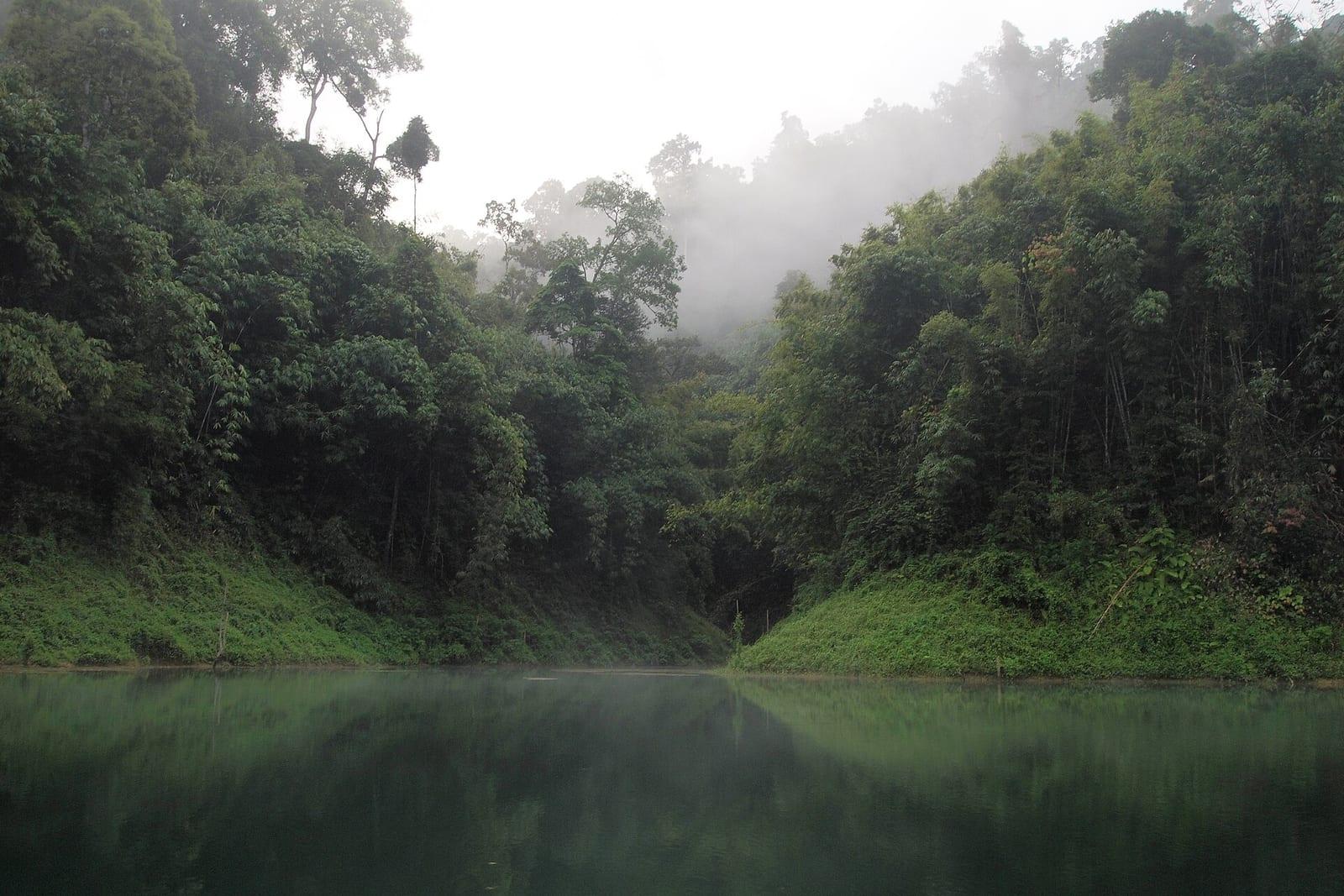
Photo: Vyacheslav Argenberg · CC BY 4.0 · via Wikimedia Commons
Ayahuasca is a plant brew from the Amazon basin that has drawn growing global attention, as a focus of scientific research, a subject of legal debate, and a destination for travellers. This guide explains, in plain terms, what it is, how it works, what it does to the people who drink it, where it comes from, and what is actually known about its risks and benefits. It is general education, not medical or legal advice.
What Ayahuasca is
Ayahuasca is a bitter, brown-to-reddish liquid traditionally prepared by combining two Amazonian plants: a vine (most often Banisteriopsis caapi) and the leaves of a second plant that contains the psychedelic compound DMT (N,N-dimethyltryptamine), typically Psychotria viridis, known as chacruna. [1] The word "Ayahuasca" comes from Quechua and is often translated as "vine of the soul" or "vine of the dead." In practice it names both the vine itself and the finished brew.
The reason both plants matter is pharmacological, and it is the single most important thing to understand about Ayahuasca. We describe it here at a conceptual level only. This is not a recipe, and we do not publish preparation methods, quantities, or sourcing information.
DMT on its own is not active when swallowed. The body has an enzyme system, monoamine oxidase, or MAO, in the gut and liver that rapidly breaks DMT down before it can reach the brain. [1] The vine contains a different class of compounds, called β-carbolines (such as harmine and harmaline), which temporarily inhibit that enzyme. [3] By slowing the breakdown of DMT, these compounds allow it to survive digestion, enter the bloodstream, and become orally active. [1] In short: one plant supplies the psychedelic molecule; the other makes it work by mouth. This is why an oral DMT brew can produce effects that smoked or injected DMT alone could not when swallowed.
What the experience is like
The effects of Ayahuasca usually begin within an hour of drinking and last several hours. They are strongly dose-, person-, and setting-dependent, and they vary enormously between individuals and even between sessions for the same person.
Commonly reported effects include vivid visual imagery (eyes open or closed), an altered sense of time and self, intensified emotion, and a feeling of confronting memories or psychological material. [4] Experiences range from peaceful and insightful to frightening and overwhelming; difficult or distressing experiences are common and are not considered abnormal.
The most consistent physical effect is what participants and traditions call the purge, nausea, vomiting, and sometimes diarrhoea. In one large survey of religious-context users, more than 90 percent reported nausea and vomiting at least once. [5] In many traditions the purge is given meaning as a form of cleansing or release, but physiologically it reflects the brew's effects on the gut and nervous system. [1] It is expected, not a sign that something has gone wrong, though it does carry practical risks such as aspiration.
Difficult, even frightening, experiences are common in Ayahuasca sessions, and are not in themselves a sign that something has gone wrong.
Ceremonial context and the role of a facilitator
Ayahuasca is rarely taken casually. In its traditional and most retreat settings it is consumed in a structured ceremony, usually at night and in a group, led by an experienced practitioner. In many Amazonian traditions this person is a curandero or curandera (healer), or in specific lineages a vegetalista or onanya; the terminology and the role differ between cultures.
The facilitator's responsibilities typically include preparing or selecting the brew, setting the structure of the night, singing icaros (medicine songs central to several traditions), and watching over participants. The quality, training, and ethics of facilitators vary widely, and the role is not formally regulated in most places. Because so much of the safety of a session depends on who is leading it and how participants are screened, choosing a setting carefully matters a great deal, a topic we treat in depth in our guide on how to choose a retreat.
Origins and the diversity of traditions
Ayahuasca is indigenous to the upper Amazon. It has been used for generations, by some estimates, possibly far longer, by indigenous and later mestizo (mixed-heritage) peoples across what is now Peru, Brazil, Colombia, and Ecuador, and is documented among dozens of distinct indigenous groups. [6] A growing archaeological record points to a long history of psychoactive plant use in the region. [6]
It is important not to flatten this into a single "Ayahuasca culture." Different peoples, the Shipibo-Conibo, the Asháninka, the various groups of the Putumayo, and many others, have their own distinct practices, songs, cosmologies, and uses, and these differ again from the urban vegetalismo of mestizo healers and from the Brazilian syncretic churches (such as Santo Daime and the União do Vegetal) that incorporate the brew into Christian-influenced religious services. [6] These lineages developed and transmitted this knowledge; the global spread of Ayahuasca, including "Ayahuasca tourism", raises real and unresolved questions about access, reciprocity, consent, and commercialisation that the people who originated these practices are still navigating. [6]
What the science actually shows
Public discussion often runs ahead of the evidence. Here is an honest summary.
Researchers have studied Ayahuasca's basic pharmacology and acute physiological effects in healthy volunteers, and there is genuine, growing clinical interest in DMT-containing and related psychedelics for conditions such as depression and anxiety. [4] The most-cited clinical result is a small randomised, placebo-controlled trial in patients with treatment-resistant depression, published in Psychological Medicine in 2019, which found that a single dose was associated with greater short-term reductions in depression scores than placebo. [4] The authors emphasised the small sample and called for replication in larger trials. [4]
That caveat applies across the field. Most of the evidence base is early-stage: small trials, observational studies of long-term religious users, and laboratory work. [4] Such studies are vulnerable to small sample sizes, the difficulty of blinding a powerful psychedelic against a placebo, and the strong influence of expectation and setting.
Risks, legality, and the limits of this guide
Ayahuasca is not harmless, and the seriousness of its risks is sometimes understated in enthusiastic accounts.
Medical and drug-interaction risks. The same MAO inhibition that makes the brew active also makes it interact dangerously with a range of medicines and other substances, including some antidepressants (SSRIs and especially other MAO inhibitors), certain other drugs, and some supplements such as St John's wort, with a risk of serotonin toxicity (serotonin syndrome), a potentially life-threatening reaction. [1] Ayahuasca also acutely raises blood pressure and heart rate, which can be hazardous for people with cardiovascular conditions. [1] Commonly cited contraindications include cardiovascular disease, pregnancy, and certain other conditions. [1] Determining whether any of this applies to you is a medical question for a qualified clinician, discuss your full medication list and health history with your prescriber, and with any retreat, before considering participation.
Psychological risks. Ayahuasca can provoke intense fear, confusion, and lasting distress, and people with a personal or family history of psychosis or bipolar disorder are generally considered to be at higher risk. [5] In surveys of long-term users, serious adverse events requiring medical or psychological help were uncommon but did occur. [5] If you are in mental-health crisis, Ayahuasca is not a substitute for care, please reach out to a clinician or a local crisis line.
Legal risk. DMT is a controlled substance in most of the world. In the United States it is a Schedule I drug, [2] and in the United Kingdom it is a Class A drug under the Misuse of Drugs Act 1971; possession and supply carry significant criminal penalties. [8] The legal status of ayahuasca as a plant preparation is more varied and unsettled, some countries permit it in defined religious contexts while prohibiting it otherwise, and the law where you live or travel may differ sharply from where a retreat operates. [7] This is not legal advice; check the law that applies to you.
Go deeper
- Ayahuasca Visions: What People Actually See (and Why) · 8 min
Ayahuasca visions explained: geometry, serpents, ancestors, life review, why they vary, why many see little, and the neuroscience, honestly framed.
- 10 Common Ayahuasca Myths and Misconceptions · 7 min
Ten common ayahuasca myths, corrected with honest, sourced facts: cure claims, "natural means safe," visions, purging, addiction, legality and more.
- What Does an Ayahuasca Ceremony Actually Feel Like? · 9 min
An honest, vivid walk-through of an Ayahuasca ceremony, setting, the brew, onset, visions, the purge, icaros, and the comedown, and why it varies so much.
- Ayahuasca vs San Pedro, Peyote and Other Plant Medicines · 7 min
How ayahuasca compares with San Pedro, peyote and iboga: different plants, compounds, durations, indigenous traditions and legal status, explained honestly.
- Ayahuasca vs Psilocybin: How Do They Compare? · 9 min
Ayahuasca vs psilocybin compared for newcomers: source, DMT plus MAOI vs psilocybin, duration, the purge, ceremony, legal status and risks.
- Ayahuasca, Trauma and PTSD: Promise and Caution · 7 min
Ayahuasca, trauma and PTSD: what early research really shows, the genuine risk of re-traumatisation, and why trauma-informed support and integration matter.
- A Brief History of Ayahuasca: From the Amazon to the West · 7 min
From ancient Amazonian roots and Brazilian churches to the modern tourism boom: an honest history of Ayahuasca, foregrounding Indigenous knowledge-holders.
- Ayahuasca and Addiction: What the Research Shows · 8 min
What does the research say about ayahuasca and addiction? An honest look at the small, preliminary studies, the strong caveats, and the real risks.
- Ayahuasca and Anxiety: What the Research Shows · 7 min
Early evidence links ayahuasca with lower anxiety over time, but it is observational and unproven, and the same brew can acutely provoke intense fear and lasting distress. An honest look at what the r
- Icaros: The Healing Songs at the Heart of Ayahuasca Ceremonies · 7 min
Icaros are the medicine songs at the heart of Ayahuasca ceremonies, the healer's primary tool, "received" from plants over years of disciplined apprenticeship. A guide to what they are, what they do,
- Ayahuasca Benefits and Risks: A Balanced, Evidence-Based Look · 7 min
A balanced, evidence-based look at ayahuasca's reported benefits and real risks, separating traditional anecdote from preliminary research and well-established facts, so you can judge the claims for y
- Is Ayahuasca Addictive? What the Evidence Says · 6 min
Is Ayahuasca addictive? The evidence says DMT isn't physically addictive and the purge is self-limiting, but psychological over-reliance is a real risk.
- How Long Does Ayahuasca Last? Onset, Peak and After-Effects · 7 min
Ayahuasca's acute effects usually last about four to six hours, onset in 20 to 60 minutes, a peak near 1.5 to 2 hours, with an afterglow and possible next-day fatigue beyond that. Here is why it las
- The Purge: Why Ayahuasca Makes You Vomit (and What It Means) · 7 min
Most people vomit on Ayahuasca. Here's the real reason, the gut, serotonin and "la purga", plus what cleansing means and the risks worth knowing.
- Will I Lose Control on Ayahuasca? Common Fears, Honestly Answered · 8 min
Worried you'll lose control, go mad or never come back on ayahuasca? An honest look at common first-timer fears, what really happens, and how to stay safe.
- Ayahuasca and Depression: What the Research Actually Shows · 6 min
A sober look at what clinical trials really show about Ayahuasca and depression, including the 2019 RCT, its limits, and why it is not an approved treatment.
- Ayahuasca Traditions: Shipibo, Santo Daime, UDV and More · 8 min
A respectful guide to ayahuasca traditions: Shipibo-Conibo and Indigenous Amazonian roots, mestizo vegetalismo, and Brazil's Santo Daime and UDV churches.
- Ayahuasca, DMT and Pharmahuasca: What’s the Difference? · 7 min
Ayahuasca, DMT and pharmahuasca all centre on one molecule but differ in route, duration, risk and legal status. A plain-language guide to what each term really means, and why the MAO inhibitor is th
Sources
- [1]Brito-da-Costa et al., Toxicokinetics and Toxicodynamics of Ayahuasca Alkaloids (DMT, Harmine, Harmaline, Tetrahydroharmine), Pharmaceuticals, 2020, Peer-reviewed review of Ayahuasca pharmacology, including MAO inhibition enabling oral DMT activity, acute physiological effects (elevated heart rate and blood pressure), the physiology of nausea and vomiting, serotonin-toxicity risk with SSRIs and other serotonergic drugs, and contraindications. ↩
- [2]DEA, Drug Fact Sheet: Hallucinogens (DMT), U.S. government source identifying DMT as the major psychoactive component of Ayahuasca and a Schedule I controlled substance. ↩
- [3]Berlowitz, Egger & Cumming, Monoamine Oxidase Inhibition by Plant-Derived β-Carbolines; Implications for the Psychopharmacology of Tobacco and Ayahuasca, Frontiers in Pharmacology, 2022, Peer-reviewed review detailing how plant-derived β-carbolines such as harmine and harmaline inhibit monoamine oxidase, the conceptual basis for Ayahuasca's oral activity. ↩
- [4]Palhano-Fontes et al., Rapid antidepressant effects of Ayahuasca in treatment-resistant depression: a randomized placebo-controlled trial, Psychological Medicine, 2019, Small RCT (n=29) reporting a short-term antidepressant signal versus placebo; described by the authors as the first controlled trial of a psychedelic in treatment-resistant depression, with the small sample warranting replication in larger trials. ↩
- [5]Durante et al. / dos Santos group, Risk assessment of Ayahuasca use in a religious context: self-reported risk factors and adverse effects, Revista Brasileira de Psiquiatria, 2021, Survey of 614 long-term religious users: high frequency of nausea and vomiting, risk factors including psychiatric history, and the rarity (about 1.5%) of persistent adverse effects requiring medical help. ↩
- [6]Cultural Survival, Ayahuasca: Shamanism Shared Across Cultures, Indigenous-rights organisation source on the Amazonian origins, the diversity of distinct lineages, and the ethics of the brew's global spread. ↩
- [7]ICEERS, Ayahuasca and the Law, NGO legal resource on the varied and unsettled legal status of Ayahuasca as a plant preparation across jurisdictions. ↩
- [8]UK Government, Drug penalties, Official UK government source: DMT is a Class A drug under the Misuse of Drugs Act 1971; possession and supply carry significant criminal penalties. ↩