Ayahuasca, DMT and Pharmahuasca: What’s the Difference?
Ayahuasca, DMT and pharmahuasca all centre on one molecule but differ in route, duration, risk and legal status. A plain-language guide to what each term really means, and why the MAO inhibitor is th
·
7 min read
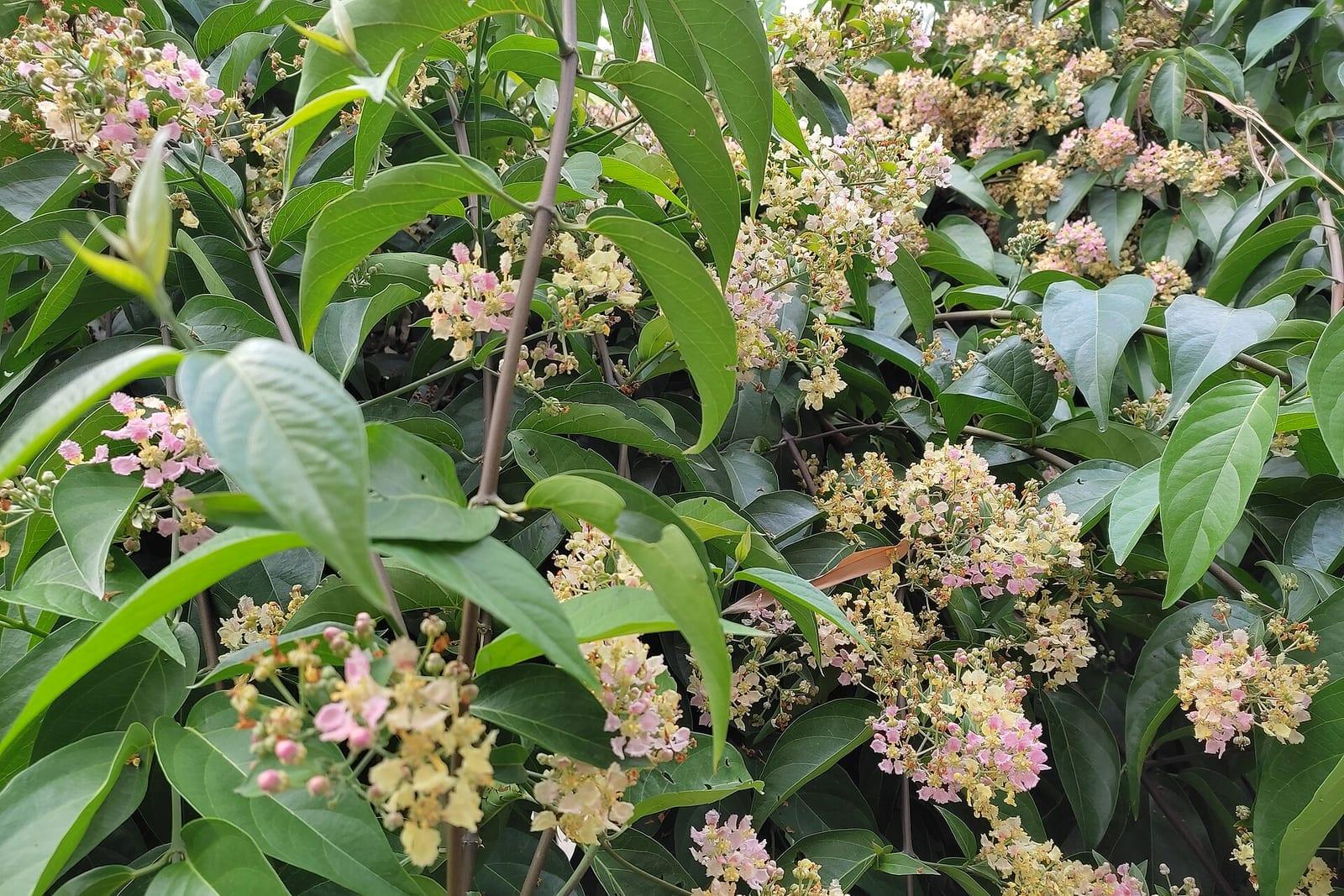
Photo: Maria Gabriela Yejo · CC0 · via Wikimedia Commons
Newcomers reading about Ayahuasca quickly run into a thicket of overlapping terms, Ayahuasca, DMT, pharmahuasca, that sound interchangeable but describe very different things. The distinctions are not pedantic. They change how long an experience lasts, what the risks are, and where you stand legally. Here is a plain-language guide to what each term means and why the differences matter.
The same molecule, three different contexts
At the centre of all three terms sits one compound: N,N-dimethyltryptamine, almost always shortened to DMT. It is a psychedelic tryptamine that acts mainly by stimulating the brain's serotonin 2A (5-HT2A) receptor. [1] But the molecule on its own tells you almost nothing about the experience. What matters is how it reaches the brain, and that is where Ayahuasca, smoked DMT, and pharmahuasca part ways.
The key fact, which the rest of this article unpacks, is this: DMT taken by mouth on its own does essentially nothing. Your body breaks it down before it can act. The three terms below are really three answers to the question of what happens around that problem.
Ayahuasca: the traditional Amazonian brew
Ayahuasca is a plant brew with deep roots in the Indigenous and mestizo traditions of the western Amazon, used for healing, divination and ceremony across many distinct lineages, Shipibo, Asháninka, and others, long before it became a subject of Western interest. It is not a single recipe or a single culture, and flattening those traditions into one generic "Ayahuasca culture" misrepresents them.
Pharmacologically, the brew combines two kinds of plant. One contributes DMT. The other, the Banisteriopsis caapi vine, contributes a group of compounds called harmala alkaloids (harmine, harmaline and tetrahydroharmine). [1] Those alkaloids are what make the brew work, for reasons we'll come to. Taken orally, Ayahuasca produces effects that are typically first noticed after 30 to 60 minutes, peak somewhere between one and two hours, and resolve within roughly four to six hours. [2] [3] It is a long, slow, immersive experience, usually accompanied by nausea and physical purging.
Smoked or vaporised DMT: short and intense
When DMT is vaporised and inhaled, the picture is completely different. There is no second plant and no harmala alkaloid involved, it is DMT alone, reaching the bloodstream through the lungs rather than the gut.
The result is a much faster, far shorter experience. Human studies describe onset within seconds and a total duration of effects of under about 30 minutes, with the compound dropping below detectable levels in blood within an hour. [4] Where Ayahuasca unfolds over an afternoon, inhaled DMT is often described as overwhelming and over almost as quickly as it begins. Same molecule, radically different route, radically different experience.
Pharmahuasca: the concept of a manufactured equivalent
Pharmahuasca is a term you'll encounter online for the concept of reproducing Ayahuasca's oral activity using isolated, manufactured ingredients, combining pure DMT with a pharmaceutical monoamine oxidase inhibitor (MAOI) instead of the caapi vine. It is best understood as a chemical idea rather than a tradition: it strips Ayahuasca down to its two functional parts and swaps the plants for laboratory compounds.
We mention it because the word appears in forums and articles, and a reader deserves to know what it means. This article does not describe how it is done, in what amounts, or with what substances, and you should treat any source that does as both dangerous and, in most jurisdictions, describing a serious crime.
Why the MAOI is the whole story
Here is the concept that ties the three terms together. The reason oral DMT alone does nothing is an enzyme in your gut and liver called monoamine oxidase (MAO). When you swallow DMT, MAO breaks it down almost immediately, a process called first-pass metabolism, converting it to an inactive byproduct before meaningful amounts can reach the brain. [5]
The harmala alkaloids in the caapi vine are MAO inhibitors: they temporarily block that enzyme. [5] With MAO inhibited, swallowed DMT survives long enough to circulate and become active. That single mechanism explains everything:
- It is why Ayahuasca is oral and long-lasting. The MAOI keeps DMT available in the body for hours, producing the slow, sustained arc described above. [3]
- It is why vaporised DMT needs no MAOI. Inhalation bypasses the gut and liver entirely, so the enzyme never gets the chance to destroy it, hence the short, sharp effect. [4]
- It is the entire premise of "pharmahuasca." The concept is simply: supply the DMT and supply the enzyme-blocker separately.
Without the MAO inhibitor, oral DMT is inert. With it, the same dose becomes an hours-long psychedelic experience. The inhibitor, not the DMT alone, defines the oral route.
Why the distinctions matter for safety
The MAOI is not a neutral helper, it is also the part that carries some of the most serious physical risks, and this is where the terms stop being academic.
Because an MAO inhibitor changes how the body handles certain neurotransmitters and substances, combining it with other drugs can be dangerous or even fatal. Of particular concern are serotonergic medications, including common antidepressants such as SSRIs. Combining MAO inhibition with these can push serotonin to harmful levels, a potentially life-threatening condition known as serotonin syndrome. [5] Researchers also flag risks with other agents, including certain migraine medications and lithium. [5]
This is precisely why the words matter. "Smoked DMT," "Ayahuasca," and "pharmahuasca" carry different interaction risks, different durations, and different settings. Treating them as one thing, as casual conversation often does, obscures exactly the information a person needs to weigh the risks honestly.
Why the distinctions matter legally
The legal picture follows the molecule, not the marketing term. In the United States, DMT is a Schedule I controlled substance under the Controlled Substances Act, the most restricted category. [6] In the United Kingdom, it is a Class A drug under the Misuse of Drugs Act 1971, the most serious classification. [7]
Because the controlled substance is DMT itself, all three of the forms above implicate it. Ayahuasca is not separately scheduled, but it contains DMT and is generally treated as a controlled preparation; isolated DMT, whether vaporised or combined with an MAOI as "pharmahuasca," is unambiguously the scheduled drug. The label does not change the legal substance underneath.
There are narrow exceptions. In the US, certain religious organisations have won the right to use Ayahuasca sacramentally: in the 2006 case Gonzales v. O Centro Espírita Beneficente União do Vegetal, the Supreme Court ruled unanimously that, under the Religious Freedom Restoration Act, the government had to permit one church to use its DMT-containing tea. [8] Several organisations now hold federal exemptions. These carve-outs are specific to recognised religious bodies and do not legalise personal use, an individual cannot claim them by drinking Ayahuasca alone at home. [8] The UK has no comparable religious exemption. [7]
The short version
- Ayahuasca, a traditional Amazonian brew of two plant types; oral; long (about 4–6 hours); works only because the vine's MAO inhibitors let oral DMT become active.
- Vaporised DMT, the isolated molecule, inhaled; very fast onset; short (under ~30 minutes); needs no MAOI.
- Pharmahuasca, a concept: isolated DMT plus a pharmaceutical MAOI, mimicking the brew's oral activity with manufactured ingredients.
Understanding which one a given source, retreat, or conversation is actually talking about is the first step to understanding the risks, medical and legal, that go with it. For anything touching your own health or medications, that understanding is a starting point for a conversation with a qualified clinician, not a substitute for one.
Sources
- [1]Carbonaro & Gatch, Neuropharmacology of N,N-Dimethyltryptamine (Brain Research Bulletin, 2016; PMC), Review of DMT receptor pharmacology (including 5-HT2A) and routes of administration, including oral Ayahuasca and the harmala alkaloids of Banisteriopsis caapi. ↩
- [2]Riba et al., Human pharmacology of Ayahuasca: subjective and cardiovascular effects and pharmacokinetics (PubMed), First placebo-controlled clinical study; effects noted at 30–60 min, peaking 60–120 min, resolving by ~240 min. ↩
- [3]Ruffell et al., Ayahuasca: pharmacology, safety, and therapeutic effects (CNS Spectrums, Cambridge Core), Reviews oral Ayahuasca duration (around 4–6 hours) and the DMT–β-carboline mechanism. ↩
- [4]Barker, S.A., N,N-Dimethyltryptamine (DMT), an Endogenous Hallucinogen (Frontiers in Neuroscience, 2018), States that the onset of vaporised DMT is rapid (similar to intravenous) and lasts less than 30 minutes. ↩
- [5]Brito-da-Costa et al., Toxicokinetics and Toxicodynamics of Ayahuasca Alkaloids (PMC), DMT's first-pass MAO-A metabolism, harmala alkaloid MAO inhibition, and serotonin-syndrome risk with SSRIs and other serotonergic agents. ↩
- [6]U.S. DEA, Drug Scheduling / Controlled Substances Act, DMT is a Schedule I controlled substance in the United States. ↩
- [7]ICEERS, Ayahuasca legal status, England and Wales, DMT is a Class A drug under the UK Misuse of Drugs Act 1971; no recognised religious exemption. ↩
- [8]Gonzales v. O Centro Espírita Beneficente União do Vegetal, 546 U.S. 418 (2006), Oyez, U.S. Supreme Court ruling under the Religious Freedom Restoration Act permitting one church's sacramental use of DMT-containing tea. ↩
What to read next
The medicine
Ayahuasca Visions: What People Actually See (and Why)
Ayahuasca visions explained: geometry, serpents, ancestors, life review, why they vary, why many see little, and the neuroscience, honestly framed.
· 8 min read
The medicine
10 Common Ayahuasca Myths and Misconceptions
Ten common ayahuasca myths, corrected with honest, sourced facts: cure claims, "natural means safe," visions, purging, addiction, legality and more.
· 7 min read
The medicine
What Does an Ayahuasca Ceremony Actually Feel Like?
An honest, vivid walk-through of an Ayahuasca ceremony, setting, the brew, onset, visions, the purge, icaros, and the comedown, and why it varies so much.
· 9 min read