Icaros: The Healing Songs at the Heart of Ayahuasca Ceremonies
Icaros are the medicine songs at the heart of Ayahuasca ceremonies, the healer's primary tool, "received" from plants over years of disciplined apprenticeship. A guide to what they are, what they do,
·
7 min read
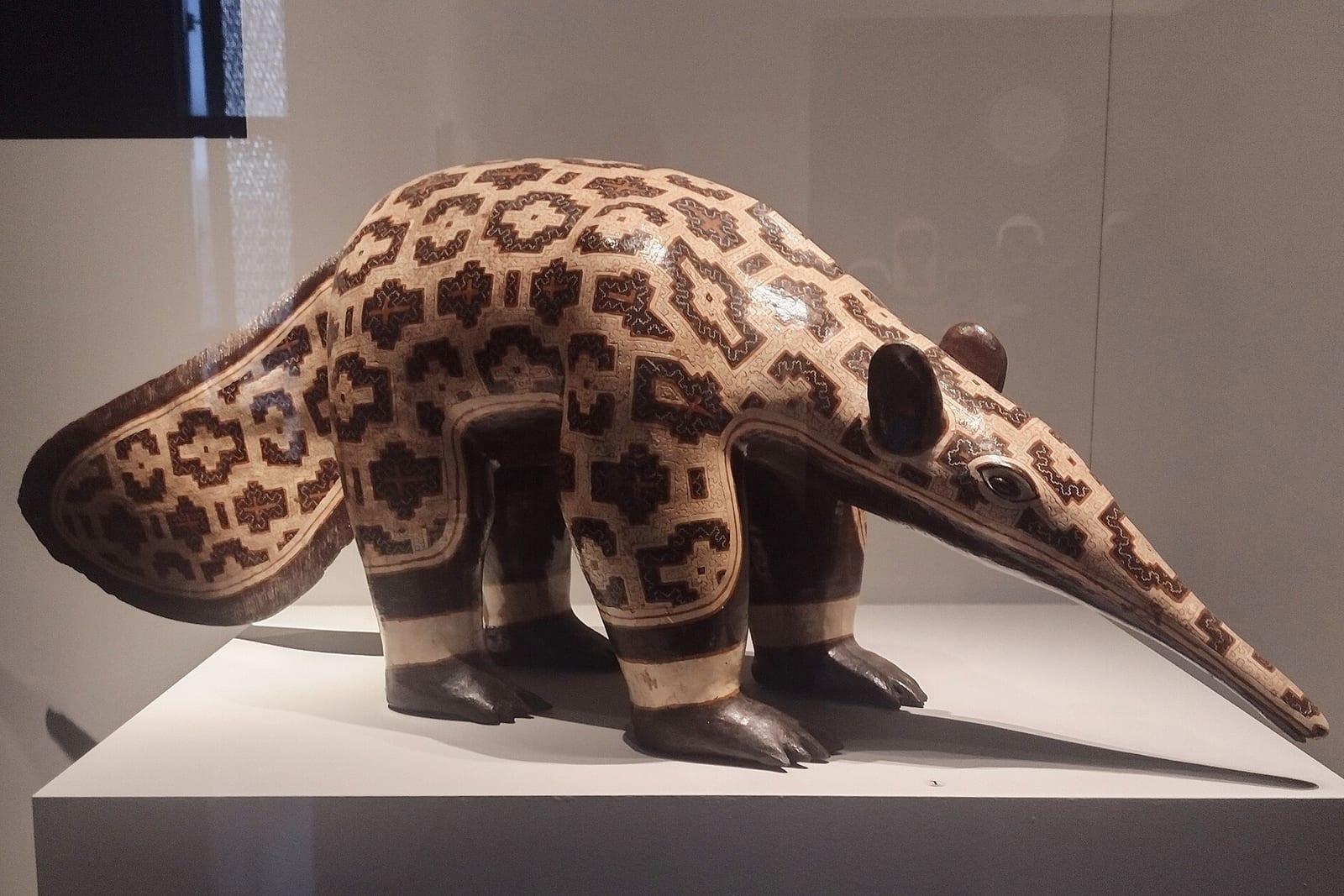
Photo: Simone Liliane · CC0 · via Wikimedia Commons
Icaros are the medicine songs sung by Amazonian healers during Ayahuasca ceremonies, most famously by the Shipibo-Conibo people of the Peruvian Amazon. They are not background music or entertainment. In the traditions that gave rise to them, icaros are understood as the healer's primary tool: melodies "received" from plants during long, solitary diets, then used to open, steer, protect, and close a ceremony. Understanding what icaros are, and who they belong to, is one of the most important and most overlooked parts of understanding Ayahuasca itself.
What are icaros?
An icaro is a song or chant used in Amazonian plant medicine, especially during ceremonies with Ayahuasca. The word is most often associated with vegetalismo, the mestizo healing tradition of the Peruvian Upper Amazon, and with the Shipibo-Conibo people, whose songs are among the best known internationally.[1] Many icaros are sung in the Shipibo-Conibo language, others in Quechua, Spanish, or a mix, and some have no fixed words at all, sounds, whistles, and vocables that carry the melody rather than a literal message.
Musicologically, icaros are often deceptively simple: short, repetitive phrases, steady rhythms, and limited melodic range, repeated and layered as a ceremony unfolds.[5] That simplicity is the point. In the traditions that use them, the power of an icaro is not held in a clever tune but in the relationship behind it, the years of training, the plant the song came from, and the healer's read of what a particular person needs at a particular moment.
How are icaros learned?
This is the part casual descriptions usually skip, and it matters most. In Shipibo and vegetalista traditions, icaros are not composed and they are not taught the way a music teacher teaches a song. They are received.
The path runs through la dieta (in Shipibo, sama): an extended, disciplined retreat in which an apprentice isolates and works with a single "master plant," following strict restrictions on food, salt, sugar, sex, and social contact, sometimes for weeks, months, or cumulatively years.[5] Through this process, in dreams, visions, and as inner sound during ceremony, the plant is said to "give" its song. The apprentice learns to hear, hold, and eventually sing what they have received. Becoming an onanya (a Shipibo word meaning roughly "one who knows," the role outsiders often call a "shaman") is the work of many years and many diets, not a weekend workshop.[6]
Icaros are the curanderos' weapons of healing, their sources of personal energy, symbols of their power and wisdom, and inheritances for their apprentices.
Whether one accepts the literal claim that plants confer songs is a matter of belief. What is not in dispute is that this is the framework the tradition uses to explain its own knowledge, and that the framework demands enormous, costly apprenticeship. That cost is central to the ethics later in this piece.
What do icaros do in an Ayahuasca ceremony?
In a traditional ceremony, the healer uses icaros to actively shape the experience rather than merely accompany it. Practitioners describe icaros as doing several jobs at once:
- Calling and opening. Songs to begin the work, summon the mareación (the visionary effect), and "open" the space.
- Steering the experience. Different icaros are said to raise or soften visions, calm fear, or move a person through a difficult passage, including the physical and emotional release often called the purge.
- Diagnosing and "working" on a person. A skilled healer may sing directly to one participant, adjusting in real time to what they perceive.
- Protecting and closing. Songs to settle the space, ground participants, and bring the ceremony to an end.
Crucially, healers and researchers alike emphasise timing and context: the same icaro sung at the wrong moment does not do the same thing. An interpretive study of patients at Peru's Takiwasi Center found that listening to icaros was therapeutically significant, helping people modulate their emotions and navigate the altered state, not as a passive soundtrack, but as something that actively organised the experience.[1] A separate study at the same centre mapped how participants experienced the songs, linking them to introspective and self-reflective states during ceremony.[2] This research is small-scale and qualitative, it documents how people experience icaros, not proof of a specific medical mechanism, but it is consistent with what the tradition has long claimed about music being central to the work. (For what the broader visionary experience can be like, see what an Ayahuasca ceremony feels like.)
Who do icaros belong to? The ethics of commercialisation and appropriation
As Ayahuasca tourism has grown, icaros have travelled far from the communities that created them, onto recordings, into Western-run retreats, and into ceremonies led by people with little or no traditional training. This raises real ethical questions, and indigenous organisations have been clear about them.
In 2008, Peru formally recognised the traditional knowledge and ritual use of Ayahuasca by Amazonian indigenous communities as national cultural heritage, explicitly to protect the healers, their knowledge, and the practice from distortion and commercial exploitation.[4] A decade later, the concerns sharpened. After the 2018 killing of the respected 81-year-old Shipibo healer Olivia Arévalo, Shipibo-Konibo-Xetebo practitioners convened and issued the Declaration of Yarinacocha, naming what they called spiritual extractivism: outsiders extracting healing, songs, and prestige while leaving inequality and harm behind. They rejected the imported word "shaman" in favour of onanya, and called for an anti-colonial ethic that accounts for the stark power and economic imbalances of the Ayahuasca boom.[3]
Healing work and indigenous self-determination must advance together.
The economic picture underlines the point. Only a small fraction of the Shipibo population benefits meaningfully from Ayahuasca tourism, while foreign-owned centres, with advantages of language, capital, and marketing, capture much of the demand, sometimes employing local healers on poor terms and investing little in training the next generation of onanya.[3] When a Western facilitator records or performs icaros without lineage, permission, or reciprocity, the harm is not abstract: it diverts both income and authority away from the people who carry the tradition.
None of this means an outsider can never honour these songs, or that recordings are always exploitative. It does mean the ethics are not optional. Reasonable principles include:
- Lineage and consent. Songs are learned within a tradition and a relationship, not lifted from a YouTube clip or claimed without training.
- Attribution. Name the people, language, and lineage; resist flattening everything into a generic "shamanic" blur.
- Reciprocity over charity. Indigenous organisations ask for justice and self-determination, fair pay, support for apprenticeships, community sovereignty, not token gestures.[3]
- Discernment as a participant. Whether icaros are sung by trained healers in their own tradition, and how a centre relates to the communities behind them, is a fair and important thing to ask about when choosing a retreat.
Why icaros are worth understanding
You can read every pharmacology page about Ayahuasca and DMT and still miss what the tradition considers the heart of the work. Icaros are where the medicine, the healer, the lineage, and the participant meet. Taking them seriously means two things at once: appreciating the depth of knowledge encoded in a few repeated phrases sung in the dark, and recognising that this knowledge belongs to living peoples who are still fighting to be heard, paid, and respected on their own terms.
Sources
- [1]Graham, Rojas Saucedo & Politi, Experiences of Listening to Icaros during Ayahuasca Ceremonies at Centro Takiwasi: An Interpretive Phenomenological Analysis (Anthropology of Consciousness, 2023), Interpretive phenomenological study finding icaros therapeutically significant in modulating emotion and the altered state for patients at the Takiwasi Center. ↩
- [2]Sherwin, Friso, Fachner & Politi, Participant experiences of icaros (Amazonian curative songs) during a traditional medicine ceremony at the Takiwasi Center, Peru (Journal of Psychedelic Studies, vol. 9 issue 2, 2024), Phenomenological mapping of how participants experience curative songs under Ayahuasca; links icaros to introspective and self-referential states. ↩
- [3]In the Declaration of Yarinacocha, Shipibo Healers Organize to Resist Spiritual Extractivism (Amazon Watch, 2018), Primary account of the Declaration of Yarinacocha, the killing of Olivia Arévalo, the term onanya, the economics of the Ayahuasca boom, and 'spiritual extractivism'. ↩
- [4]Giove Nakazawa, The Ayahuasca Ritual: Peruvian National Cultural Heritage and Its Possible Integration into the Primary Health System (Revista Cultura y Droga, 27(33), 2022), Peer-reviewed account of Peru's 24 June 2008 declaration (National Institute of Culture Resolution 836/INC) recognising indigenous Ayahuasca knowledge and ritual as National Cultural Heritage. ↩
- [5]Bustos, The House that Sings: The Therapeutic Use of Icaros at Takiwasi, Susana Bustos's research on icaros at the Takiwasi Center; describes the diet (la dieta) through which songs are received and icaros as the curanderos' tools, energy sources, and apprentices' inheritance. ↩
- [6]ASOMASHK Pronouncement 2019, Shipibo Conibo Center, Shipibo-Konibo-Xetebo healers' association statement on ancestral medicine, the role of onanya, and the ethics of the Ayahuasca boom. ↩
Frequently asked questions
- What does icaro mean?
- An icaro is a medicine song or chant used by Amazonian healers, especially during Ayahuasca ceremonies. The term is most associated with the mestizo vegetalismo tradition of the Peruvian Amazon and with the Shipibo-Conibo people, whose icaros are among the best known internationally.
- What language are icaros sung in?
- It varies by lineage. Many Shipibo icaros are sung in the Shipibo-Conibo language; others use Quechua, Spanish, or a blend. Some icaros have no fixed words at all, carrying the melody through whistles, sounds and vocables rather than literal lyrics.
- How do shamans learn icaros?
- In Shipibo and vegetalista traditions, icaros are not composed or formally taught, they are said to be 'received' from plants during la dieta (in Shipibo, sama), an extended, restrictive solitary retreat. Becoming a recognised healer, or onanya, takes many years and many diets, not a short course.
- What do icaros do during an Ayahuasca ceremony?
- Healers use icaros to open the space, raise or soften the visionary effect, calm fear, work on individual participants, and close the ceremony. Practitioners and researchers stress that timing and context matter, the same song at the wrong moment does not have the same effect. Icaros are not a substitute for proper medical screening.
- Is using or recording icaros cultural appropriation?
- It can be. Indigenous organisations such as the Shipibo-Konibo-Xetebo healers behind the Declaration of Yarinacocha have warned against 'spiritual extractivism', outsiders profiting from songs and knowledge without lineage, permission or reciprocity. Honouring icaros means naming their origins, respecting consent, and supporting the communities and healers who carry them.
- Are icaros proven to heal?
- Icaros are central to traditional Amazonian healing, and small qualitative studies suggest listening to them helps participants modulate emotion and navigate the Ayahuasca experience. But this research documents how people experience the songs rather than proving a specific medical effect, and it should not be read as a claim that Ayahuasca or icaros cure any condition.
What to read next
The medicine
Ayahuasca Visions: What People Actually See (and Why)
Ayahuasca visions explained: geometry, serpents, ancestors, life review, why they vary, why many see little, and the neuroscience, honestly framed.
· 8 min read
The medicine
10 Common Ayahuasca Myths and Misconceptions
Ten common ayahuasca myths, corrected with honest, sourced facts: cure claims, "natural means safe," visions, purging, addiction, legality and more.
· 7 min read
The medicine
What Does an Ayahuasca Ceremony Actually Feel Like?
An honest, vivid walk-through of an Ayahuasca ceremony, setting, the brew, onset, visions, the purge, icaros, and the comedown, and why it varies so much.
· 9 min read