What Does an Ayahuasca Ceremony Actually Feel Like?
An honest, vivid walk-through of an Ayahuasca ceremony, setting, the brew, onset, visions, the purge, icaros, and the comedown, and why it varies so much.
By Elena Marsh
·
9 min read
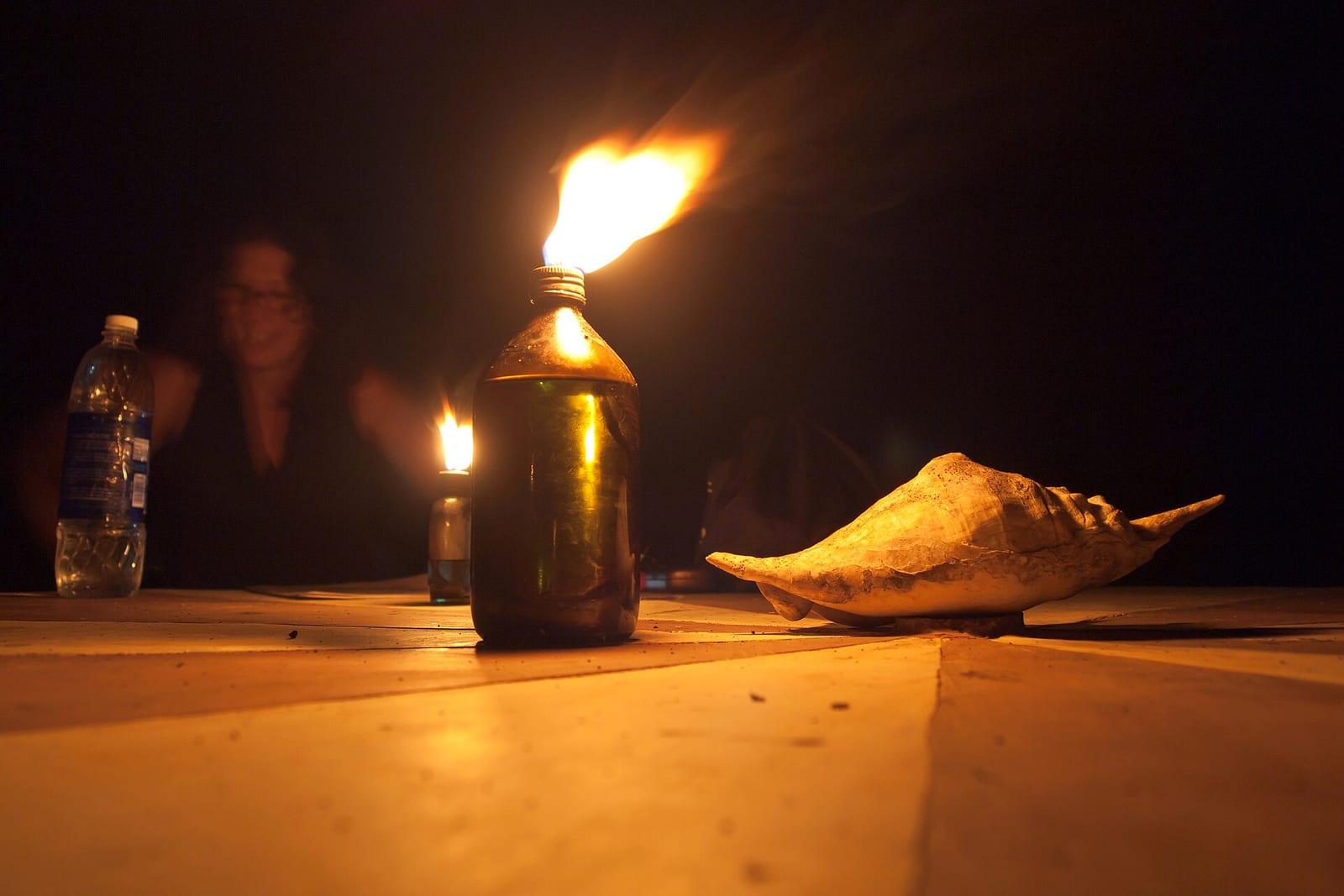
Photo: Vyacheslav Argenberg · CC BY 4.0 · via Wikimedia Commons
Most people describe an Ayahuasca ceremony as a slow build into several hours of intensely altered consciousness: vivid inner imagery, surges of emotion, a roiling stomach that often ends in vomiting, and a gradual return to ordinary awareness, all held inside a quiet, song-filled room. But the honest answer is that it varies enormously, from profound and gentle to frightening and physically rough, and no two ceremonies, or two people, feel the same.
If you are reading this because you are nervous, that is a sensible place to start. An Ayahuasca ceremony is not a recreational high and not a guaranteed catharsis. It is a long, unpredictable, sometimes difficult few hours that people approach with respect. This page walks through what tends to happen, from arrival to comedown, while being clear about how much it differs from person to person, and clear that nothing here is a promise of healing.
What is Ayahuasca and why does it feel the way it does?
Ayahuasca is a bitter brew traditionally made in the Upper Amazon from the Banisteriopsis caapi vine combined with a DMT-containing plant such as Psychotria viridis (chacruna).[1] The pairing is the whole point: DMT taken by mouth is normally broken down in the gut before it can act, but the vine contains harmala alkaloids (harmine, harmaline, tetrahydroharmine) that temporarily inhibit the enzyme monoamine oxidase, allowing the DMT to reach the brain.[1][2] That is why an oral brew can produce hours of effect where DMT alone would not. (For the fuller picture, see what is Ayahuasca and the difference between Ayahuasca, DMT and pharmahuasca.)
This pharmacology matters for safety as much as for sensation. Because the harmala alkaloids inhibit MAO, Ayahuasca interacts dangerously with a range of medications, antidepressants among them, and can place real stress on the heart.[3] Those risks are covered in depth elsewhere on this site; if you take any prescription medication, this is a conversation for a clinician and the retreat, not a website. See Ayahuasca and antidepressants and the safety and contraindications pillar.
Arriving: the setting and the hours before
Ceremonies almost always happen at night, in a dedicated space, a maloca (ceremonial hut), a darkened room, or a quiet hall. People settle onto a mat or mattress with a blanket, a cushion, and a bucket within reach. The room is usually lit only by a candle or kept fully dark.
By the time you drink, you will typically have spent days on a restricted diet (the dieta), avoiding certain foods, alcohol and substances, partly for safety, partly as preparation. The mood beforehand is usually quiet and slightly tense. Most people feel some anticipatory fear. That is normal, and experienced facilitators expect it.
Drinking the brew and waiting for the onset
The brew itself is famously unpleasant, thick, dark, intensely bitter and earthy. You drink a cupful, return to your place, and wait. This waiting period is one of the strangest parts: for the first 20 to 60 minutes, often nothing obvious happens.[4] People describe a slow shift, a faint humming in the body, heightened sensitivity to sound, a sense of pressure or anticipation, sometimes a wave of nausea, before anything visual begins.
Onset is gradual rather than sudden, and its timing varies between people and between brews. Some feel the change quickly; others wait, occasionally take a second cup if the facilitator offers one, and come up later. There is no way to know in advance which you will be.
What does the peak of an Ayahuasca ceremony actually feel like?
The peak usually arrives one to two hours after drinking and can last a couple of hours, with the whole ceremony commonly running four to six hours, sometimes longer.[4] What happens in that window is the part no two accounts agree on, because it genuinely differs that much.
Commonly reported features include:
- Visual phenomena, with eyes closed, geometric patterns, vivid scenes, landscapes or figures; with eyes open, the room may seem to breathe, shift or shimmer. Some people see very little visually and experience the journey as emotional or bodily instead.
- Emotional surges, grief, fear, love, awe, or memories arriving with unusual force. People often describe feeling as though they are processing something rather than simply seeing it.
- Altered sense of self and time, the boundary between "you" and everything else can soften; minutes can feel like hours.
- A sense of meaning or insight, many describe arriving at thoughts about their life that feel important, though whether those insights hold up is something to weigh later, in integration.
You don't get the experience you want; you get the experience you get.
It is important to say plainly: difficult experiences are common and considered normal. In the large Global Ayahuasca Survey of more than 10,000 people, around 56% reported some adverse mental-health effect in the weeks or months afterwards, yet roughly 88% of those framed it as part of a positive process of growth or integration.[5] That reframing is not guaranteed, and it is not the same as a clinical benefit. Fear, confusion, and the feeling of being overwhelmed are part of the territory, not a sign something has gone wrong. If a hard experience feels likely or frightening to you, preparing for a difficult Ayahuasca experience is worth reading first.
The purge: why people vomit
Vomiting is so common it has its own name in this context: la purga, the purge. In the same survey, about 70% of participants reported acute physical effects, with nausea and vomiting by far the most frequent.[5] In traditional and many contemporary settings, purging is not treated as a side effect to be suppressed but as part of the process, often described as a release of something physical or emotional.[6]
In practice it can mean retching into a bucket, diarrhoea, sweating, shaking, or yawning and crying. Some people find it cathartic; others simply find it grim. Either reaction is normal. The buckets in the room are there for a reason, and facilitators treat the purge as expected rather than alarming. (See the Ayahuasca purge explained.)
The role of icaros and facilitators
Through all of this, the room is rarely silent. In Amazonian traditions the ceremony is shaped by icaros, medicine songs sung by the curandero or facilitator.[6] These are not background music. They are used to guide the intensity of the experience, to steady people who are struggling, and, in the traditional understanding, to invoke and direct the healing.[6] Participants often report that the songs gave the experience a shape, something to follow when the inner world became disorienting, a thread back to the room.
Facilitators do more than sing. A good team watches the room, helps people who are frightened or physically unwell, manages safety, and holds the space so participants can let go. The quality and ethics of that team vary enormously, which is precisely why vetting the people running a ceremony matters so much. The songs and the lineages behind them belong to specific indigenous traditions; treating them, and the people who carry them, with respect is part of engaging honestly with this practice. (More on the music in icaros, the songs of Ayahuasca.)
The comedown and the hours after
The intensity does not switch off; it ebbs. Over roughly the final hours of the ceremony, the visions recede, the body settles, and ordinary awareness returns, often leaving people quiet, tired, tender, and sometimes elated or shaken.[4] Many describe an "afterglow" of calm or clarity in the following day or two; others feel raw, unsettled, or simply exhausted. Sleep can be disrupted that night.
What the experience means tends to land later, not in the room. This is why integration, making sense of what came up, and deciding what, if anything, to do with it, is treated as a serious part of the process rather than an afterthought.
So what does it actually feel like? An honest summary
If there is one through-line in thousands of accounts, it is unpredictability. People report everything from quiet, almost gentle reflection to terrifying, ego-dissolving hours they would not repeat, sometimes within the same ceremony. The brew is bitter, the purge is common, the visions may or may not come, the emotions can be overwhelming, the songs hold it together, and the comedown is slow.
Research into Ayahuasca's psychological effects is genuinely interesting but still early-stage, and the experience itself is described honestly as variable, demanding, and sometimes hard.[1] Going in with realistic expectations, and a properly vetted setting, is the single best thing you can do to meet it well.
Sources
- [1]Ruffell S. et al., Ayahuasca: a review of historical, pharmacological, and therapeutic aspects (Psychiatry and Clinical Neurosciences Reports, 2023), Peer-reviewed review covering Ayahuasca's plant constituents, pharmacology, acute effects and the early-stage state of therapeutic evidence. ↩
- [2]Brito-da-Costa A.M. et al., Toxicokinetics and Toxicodynamics of Ayahuasca Alkaloids (Pharmaceuticals, 2020; PMC7690791), Details DMT plus harmala alkaloids (harmine, harmaline, THH) and the MAO-inhibition mechanism that makes oral DMT active. ↩
- [3]Cleveland Clinic, Ayahuasca: What It Is and Risks, Clinician-reviewed overview of effects and risks, including raised heart rate/blood pressure and dangerous interactions with antidepressants and other drugs. ↩
- [4]Toxicokinetics review (PMC7690791) and clinical timelines, onset and duration of Ayahuasca effects, Onset typically within ~20–60 minutes, peak ~1–2 hours, total acute effects commonly ~4–6 hours. ↩
- [5]Bouso J.C. et al., Adverse effects of Ayahuasca: Results from the Global Ayahuasca Survey (PLOS Global Public Health, 2022), Survey of >10,000 people; ~70% reported acute physical effects (mainly vomiting/nausea), 2.3% needed medical attention, ~56% reported later adverse mental-health effects, ~88% of whom saw them as part of positive growth. ↩
- [6]Cultural Survival, Ayahuasca: Shamanism Shared Across Cultures, Indigenous origins, ceremonial context, the curandero's role and the function of icaros (medicine songs), including the purge as a traditional part of the process. ↩
Frequently asked questions
- How long does an Ayahuasca ceremony last?
- Effects usually begin within about 20 to 60 minutes, peak around one to two hours in, and the full acute experience commonly lasts four to six hours, though some people feel effects for less time and others for longer. The comedown is gradual rather than abrupt.
- Does everyone vomit during Ayahuasca?
- Not everyone, but most do: in a survey of over 10,000 people, around 70% reported acute physical effects, mainly nausea and vomiting. Known as la purga, it is treated as part of the process in traditional and many contemporary ceremonies rather than as a side effect to suppress.
- Is an Ayahuasca experience always positive or healing?
- No. Experiences range from gentle to deeply difficult, and challenging emotional states are common and normal. Many people later frame hard experiences as growth, but that is not guaranteed, and Ayahuasca is not a proven treatment, research into its psychological effects is still early-stage.
- What do the songs (icaros) do during a ceremony?
- Icaros are medicine songs sung by the curandero or facilitator. They are used to guide the intensity of the experience, steady people who are struggling, and, in Amazonian traditions, to direct the healing, often giving participants a thread to follow when the inner world becomes disorienting.
- Can you have a bad trip on Ayahuasca?
- Yes. Fear, confusion, distressing imagery and a sense of being overwhelmed are common and not a sign that something has gone wrong. A skilled facilitator and good setting help, but they cannot guarantee a smooth experience; preparation and realistic expectations matter.
- Is Ayahuasca safe to take if I'm on antidepressants?
- This needs professional input, not a general answer. Ayahuasca inhibits monoamine oxidase and can interact dangerously with antidepressants and other medications, with a risk of serotonin syndrome. Never stop prescribed medication on your own, discuss your situation with your prescriber and the retreat.
What to read next
The medicine
Ayahuasca Visions: What People Actually See (and Why)
Ayahuasca visions explained: geometry, serpents, ancestors, life review, why they vary, why many see little, and the neuroscience, honestly framed.
· 8 min read
The medicine
10 Common Ayahuasca Myths and Misconceptions
Ten common ayahuasca myths, corrected with honest, sourced facts: cure claims, "natural means safe," visions, purging, addiction, legality and more.
· 7 min read
The medicine
Ayahuasca vs San Pedro, Peyote and Other Plant Medicines
How ayahuasca compares with San Pedro, peyote and iboga: different plants, compounds, durations, indigenous traditions and legal status, explained honestly.
· 7 min read