10 Common Ayahuasca Myths and Misconceptions
Ten common ayahuasca myths, corrected with honest, sourced facts: cure claims, "natural means safe," visions, purging, addiction, legality and more.
By Elena Marsh
·
7 min read
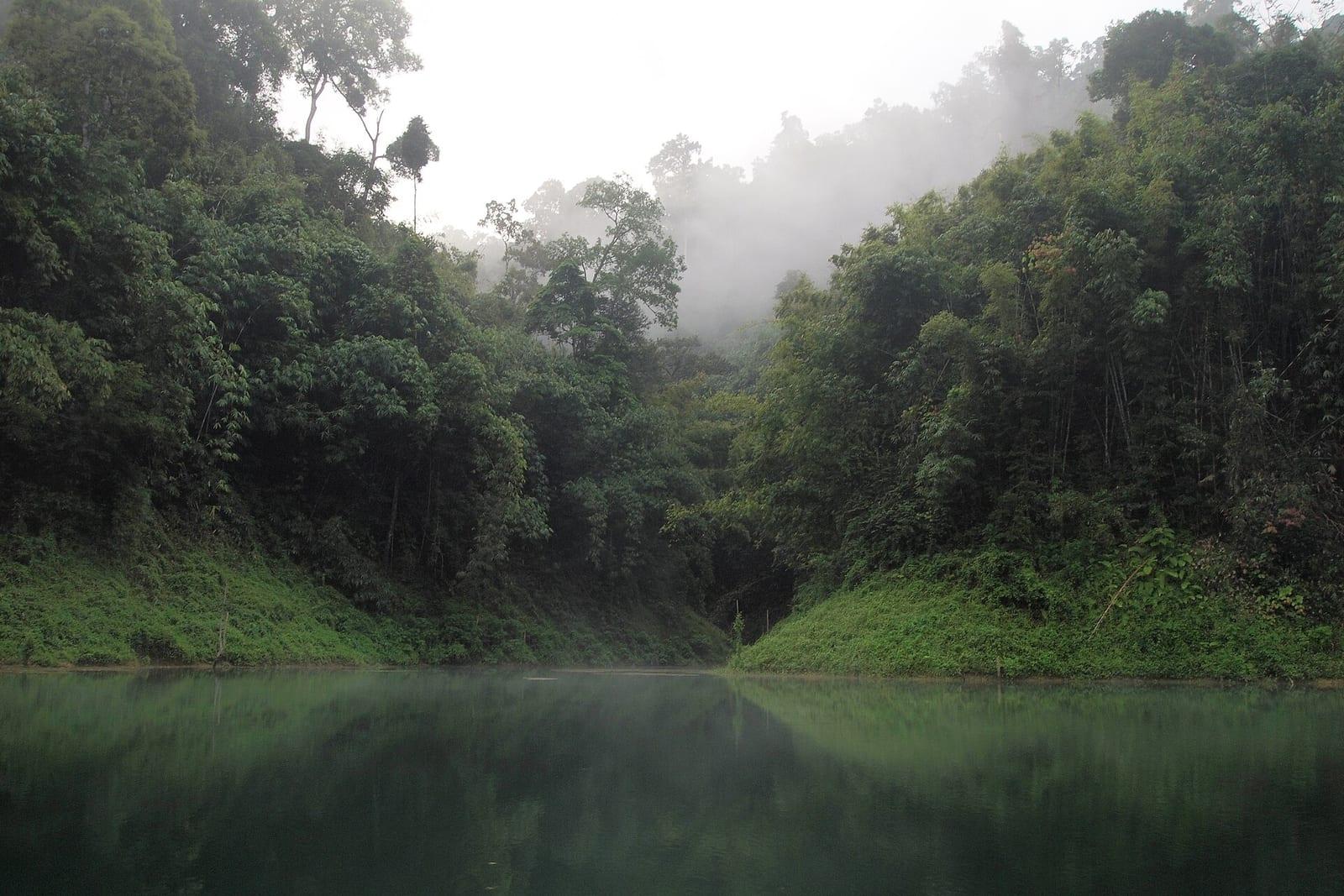
Photo: Vyacheslav Argenberg · CC BY 4.0 · via Wikimedia Commons
Ayahuasca attracts strong claims from every direction: that it is a guaranteed cure, that it is risk-free because it is "natural," that everyone has visions, that you have to purge to heal. Most of these are half-truths at best. Here are ten of the most common myths about ayahuasca, corrected with honest, sourced framing so you can make a decision based on what is actually known rather than what tends to get repeated.
If you are researching ayahuasca for the first time, you have probably already met a mix of glowing testimonials and frightening headlines. The truth usually sits in between. Below, each myth is paired with what the evidence and lived practice actually support. For the foundations, our pillar on what ayahuasca is is a good companion to this page.
Myth 1: Ayahuasca is a guaranteed cure
This is the most important one to get straight. Ayahuasca is not a proven cure for depression, addiction, PTSD, or anything else.
There is genuinely interesting early research. A small randomised, placebo-controlled trial in people with treatment-resistant depression found significantly lower depression scores in the ayahuasca group up to seven days after a single dose.[1] That is a real, peer-reviewed result, and it is why scientists are paying attention. But it involved 29 people, measured short-term outcomes, and has not been replicated at scale. "Promising and preliminary" is the honest description, not "cure."
You can read more in our overview of ayahuasca benefits and risks and on what the research shows for anxiety.
Myth 2: It is totally safe because it is natural
"Natural" and "safe" are not the same thing. Plenty of natural compounds are powerful drugs, and ayahuasca is one of them.
The brew combines DMT with monoamine oxidase inhibitors (MAOIs) from the Banisteriopsis caapi vine.[2] Those MAOIs are pharmacologically active and are the reason ayahuasca interacts dangerously with certain medications and foods. Ayahuasca also temporarily raises heart rate and blood pressure, which matters for people with cardiovascular conditions.[3]
The honest framing: serious harm is uncommon when people are properly screened and supervised, but ayahuasca is not risk-free. Our pillar on safety and contraindications and the article on who should not take ayahuasca go into detail.
Myth 3: People die from ayahuasca all the time
You may have seen alarming death-toll headlines. The reality is more specific.
When researchers at ICEERS examined 58 deaths reported in connection with ayahuasca between 2010 and 2022, no autopsy or toxicological examination directly attributed a death to acute intoxication from the traditional brew itself.[4] The deaths that could be explained involved other causes: tobacco poisoning from a separate plant brew, pre-existing heart conditions, drowning, accidents, or events unrelated to the ceremony.
Most of these deaths could have been avoided if the experiences had followed minimum safety standards and the sessions had been supervised.
The takeaway is not "ayahuasca is harmless." It is that the recorded harms cluster around poor screening, unsafe additives, unsupervised settings, and pre-existing conditions, which is exactly why how you choose a retreat matters so much.
Myth 4: It is non-addictive, so it carries no risk
Ayahuasca does have a low dependence potential. A risk assessment of ritual oral DMT and harmala alkaloids concluded that "the dependence potential of oral DMT and the risk of sustained psychological disturbance are minimal."[5] Unlike alcohol, opioids, or stimulants, it does not strongly drive the brain's reward circuitry, and few people compulsively crave it.
But low addiction potential does not mean low risk. The real risks are different: dangerous drug interactions, psychological distress, and challenges for vulnerable people. "Not addictive" and "safe for everyone" are two different claims, and only the first is well supported.
Myth 5: You can safely take it with your antidepressant
This myth can be genuinely dangerous. Because ayahuasca contains MAOIs, combining it with certain antidepressants, especially SSRIs and SNRIs, can raise the risk of serotonin syndrome, a potentially serious reaction.[6] Other MAOI-based antidepressants carry their own interaction concerns.
This is not something to manage on your own or to spring on a retreat at the last minute. Stopping or changing psychiatric medication has its own risks and must be done with the prescriber who manages it. We cover the specifics in ayahuasca and antidepressants.
Myth 6: Everyone has visions
Visions are real for many people, but they are not universal or guaranteed. Some participants experience vivid imagery; others feel intense emotion, bodily sensation, or insight with little visual content; some feel relatively little on a given night. None of these outcomes means you "did it wrong."
Intensity varies with the individual, the brew, the setting, and the number of ceremonies. If you are picturing a guaranteed cinematic experience, it helps to reset expectations. Our pieces on what a ceremony feels like and what people see give a more grounded picture.
Myth 7: You must purge to heal
The purge, which can mean vomiting, crying, or other physical release, is culturally meaningful in many traditions, and many people do experience it. But the idea that healing requires purging, or that the amount you purge measures the value of the night, is a misconception.
Plenty of people have meaningful experiences without dramatic purging. Treating the purge as a scoreboard sets people up to judge their own experience harshly. For a balanced view, see the ayahuasca purge explained.
Myth 8: It is safe for everyone
It is not. Beyond medication interactions, there are people for whom ayahuasca carries elevated risk. A personal or family history of psychotic disorders such as schizophrenia, or of bipolar disorder, is a standard exclusion in clinical and harm-reduction protocols, because of the risk of triggering a manic or psychotic episode.[7] Certain heart conditions are also a serious concern.[3]
This is the entire reason responsible retreats screen applicants and ask detailed health questions. Read more in can ayahuasca trigger psychosis and ayahuasca and your heart. A retreat that does not screen carefully is a warning sign, not a convenience.
Myth 9: It is legal because it is a plant
This one trips up a lot of newcomers. DMT, the principal psychoactive in ayahuasca, is a Schedule I controlled substance in the United States and a Class A drug in the UK.[8] In many countries, possessing the prepared brew is treated as possessing DMT.
There are narrow exceptions. The 1971 UN Convention does not extend international control to the plants themselves, some countries (such as Peru and Brazil) permit traditional or religious use, and a few US religious organisations hold specific court-mandated exemptions.[8] Those exemptions do not make ayahuasca legal for the general public. Check the legal picture for your situation in where ayahuasca is legal.
Myth 10: A real shaman or a retreat removes all risk
Good facilitation matters enormously, and a well-run, well-screened retreat genuinely reduces risk. But "experienced facilitator" is not the same as "no risk," and the term shaman is unregulated. Skill, ethics, medical preparedness, and honest screening vary widely between centres.
The protective factor is not a title; it is the system around you: careful screening, sober supervision, an emergency plan, no dangerous additives, and honest expectations. That is why we encourage everyone to come with questions to ask a retreat rather than assuming reputation alone keeps them safe.
The honest summary across all ten myths is the same: ayahuasca is neither a miracle nor a monster. It is a powerful psychoactive preparation with early scientific interest, real and specific risks, and outcomes that depend heavily on who you are, who is guiding you, and how carefully you prepare.
Sources
- [1]Palhano-Fontes et al. (2019). Rapid antidepressant effects of ayahuasca in treatment-resistant depression: a randomized placebo-controlled trial. Psychological Medicine., Small (n=29) RCT; basis for honest 'preliminary' framing of depression research. ↩
- [2]Brierley & Davidson (2020/related). The pharmacological interaction of compounds in ayahuasca: a systematic review. (PMC), Confirms DMT + MAOI (harmala) composition and interaction pharmacology. ↩
- [3]Wsol et al. Cardiovascular safety of psychedelic medicine: current status and future directions. (PMC), Cardiovascular effects of psychedelics, relevant to heart-condition risk. ↩
- [4]ICEERS. Examining the Deaths Misattributed to Ayahuasca., Review of 58 reported deaths (2010-2022); none toxicologically attributed to the brew itself. ↩
- [5]Gable, R. S. (2007). Risk assessment of ritual use of oral dimethyltryptamine (DMT) and harmala alkaloids. Addiction, 102(1), 24-34., Concludes dependence potential and sustained psychological risk are minimal. ↩
- [6]Malcolm & Lee. Ayahuasca / psychedelic and antidepressant interactions and serotonin syndrome (systematic review, PMC)., MAOI content and serotonin syndrome risk when combined with SSRIs/MAOIs; documented case of serotonin syndrome with fluoxetine. ↩
- [7]dos Santos et al. (2017). Ayahuasca, dimethyltryptamine, and psychosis: a systematic review of human studies. (PMC), Psychotic episodes rare but linked to personal/family history of psychosis or bipolar disorder. ↩
- [8]Legal status of ayahuasca by country (overview) and DMT scheduling under the US Controlled Substances Act / 1971 UN Convention., DMT Schedule I (US) / Class A (UK); 1971 Convention does not control the plants; narrow religious exemptions exist. ↩
Frequently asked questions
- Is ayahuasca a proven cure for depression or addiction?
- No. There is promising early research, including a small placebo-controlled trial in treatment-resistant depression, but it is preliminary and not replicated at scale. Ayahuasca is not an approved or proven treatment and is not a substitute for evidence-based care.
- Is ayahuasca safe because it is natural?
- Not necessarily. Being plant-derived does not make it risk-free. Ayahuasca contains active MAOIs, raises heart rate and blood pressure, and can interact dangerously with some medications. Serious harm is uncommon with proper screening and supervision, but it is not without risk.
- Can you mix ayahuasca with antidepressants?
- This can be dangerous. Ayahuasca's MAOIs combined with SSRIs, SNRIs or other serotonergic drugs can raise the risk of serotonin syndrome. Never combine them on your own, and never stop or change psychiatric medication without your prescriber's guidance.
- Does everyone have visions on ayahuasca?
- No. Some people have vivid visions, others experience mainly emotion, bodily sensation or insight, and some feel relatively little on a given night. None of these means the experience failed; intensity varies by person, brew and setting.
- Do you have to purge to heal?
- No. Purging is culturally meaningful and common in many traditions, but it is not required for a meaningful experience, and the amount you purge is not a measure of how much you healed.
- Is ayahuasca legal because it comes from a plant?
- Generally no. DMT, its main psychoactive, is Schedule I in the US and Class A in the UK, and the prepared brew is often treated as DMT. Some countries permit traditional or religious use and a few religious groups hold narrow exemptions, but it is not legal for the general public in most places.
What to read next
The medicine
Ayahuasca Visions: What People Actually See (and Why)
Ayahuasca visions explained: geometry, serpents, ancestors, life review, why they vary, why many see little, and the neuroscience, honestly framed.
· 8 min read
The medicine
What Does an Ayahuasca Ceremony Actually Feel Like?
An honest, vivid walk-through of an Ayahuasca ceremony, setting, the brew, onset, visions, the purge, icaros, and the comedown, and why it varies so much.
· 9 min read
The medicine
Ayahuasca vs San Pedro, Peyote and Other Plant Medicines
How ayahuasca compares with San Pedro, peyote and iboga: different plants, compounds, durations, indigenous traditions and legal status, explained honestly.
· 7 min read