Ayahuasca Visions: What People Actually See (and Why)
Ayahuasca visions explained: geometry, serpents, ancestors, life review, why they vary, why many see little, and the neuroscience, honestly framed.
By Elena Marsh
·
8 min read
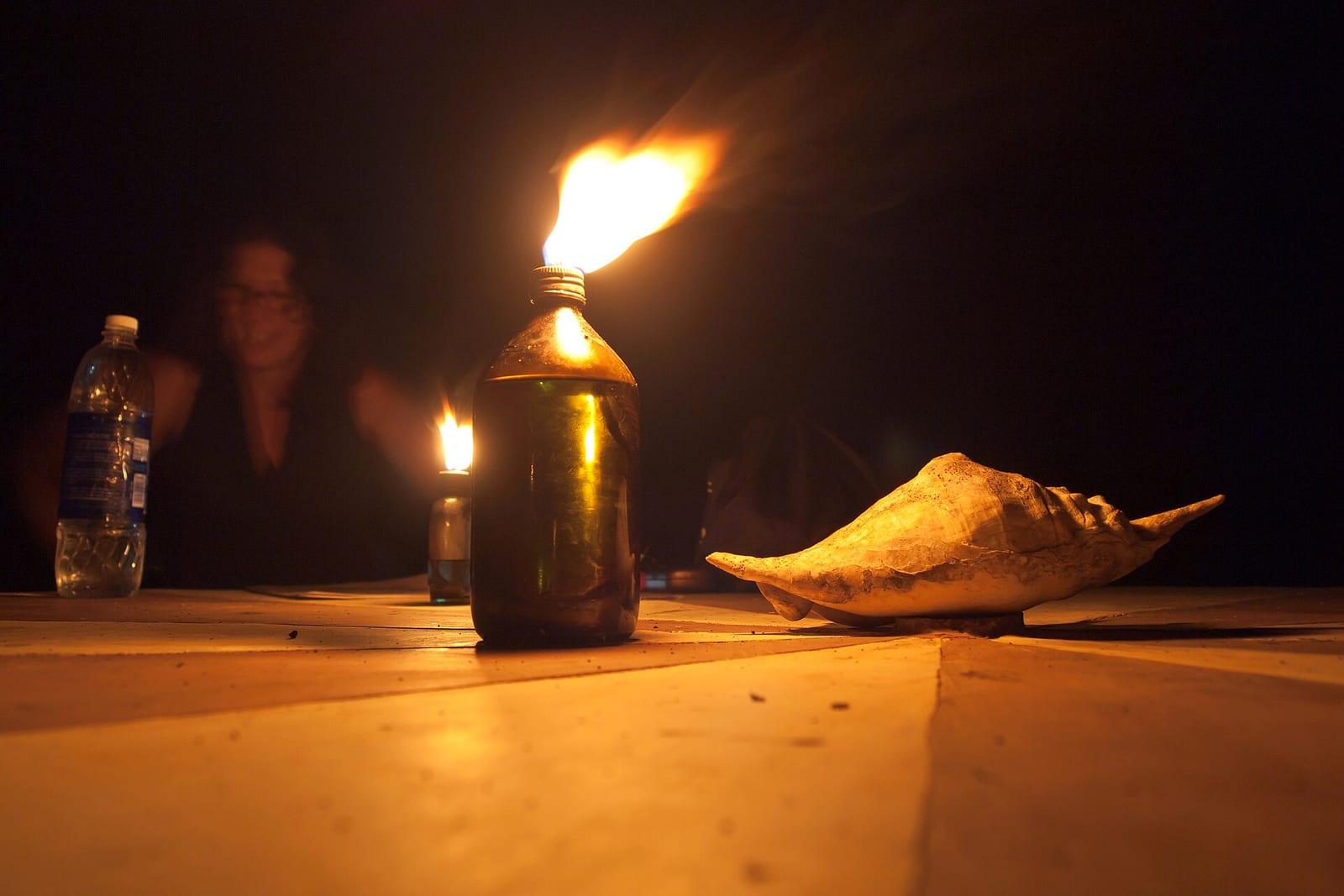
Photo: Vyacheslav Argenberg · CC BY 4.0 · via Wikimedia Commons
Ayahuasca visions range from kaleidoscopic geometry behind closed eyes to vivid scenes of animals, ancestors, or whole life chapters replayed in minutes, and for some people, almost nothing visual at all. What you see is shaped by the brew, the dose, your own mind, and the setting, and the meaning you draw from it is something you construct afterwards rather than a message delivered from outside. This is a guide to what the visionary state, often called mareación, actually looks like, why it differs so much between people, and what neuroscience can and cannot yet explain.
What is the ayahuasca visionary state ("mareación")?
In the Amazonian traditions that use it, the altered state ayahuasca produces is often called mareación, a Spanish word for dizziness or intoxication. It is not only visual. It blends shifting imagery, strong bodily sensations, waves of emotion, changes in your sense of time and self, and often nausea or the purge. Visions are one thread inside that larger fabric, not the whole experience.
Most visions arrive with the eyes closed, which is why ceremonies usually happen in darkness or low light. Some people also notice open-eyed effects: surfaces that breathe, patterns crawling across walls, colours that seem more saturated. The visionary state tends to come in waves rather than as a steady picture, rising and fading over the hours a ceremony lasts. If you want the broader picture of the night itself, our guide to what an ayahuasca ceremony feels like sets the scene.
What do people actually see? Common ayahuasca visions
There is no standard ayahuasca vision, but decades of reports, plus modern surveys of the closely related compound DMT, point to recurring categories. In one of the largest analyses to date, researchers coded 3,778 first-person DMT accounts and found visual geometry in roughly a third of reports and encounters with apparent "entities" or beings in just under half.[1] Ayahuasca is gentler and longer than smoked DMT, so the flavour differs, but the themes overlap.
Geometry, fractals, and patterns
Often the first thing people notice is entoptic imagery: lattices, grids, spirals, honeycombs, tunnels, and fractal patterns in vivid, sometimes neon colour. These shapes appear remarkably consistent across cultures and eras, which researchers link to the underlying architecture of the visual system rather than to any specific content from your life.
Serpents, jaguars, and the natural world
Snakes are the single most reported animal in the Amazonian context, alongside jaguars, birds, and lush vegetal scenes of vines, roots, and forest. Anthropologists have long noted how often these images echo the rainforest and the iconography of the traditions themselves, a reminder that set and setting shape what surfaces.
Ancestors, beings, and "the feminine"
Many people report meeting figures: deceased relatives, ancestral presences, divine or guiding beings, and what surveys of DMT users frequently describe as a benevolent feminine presence.[1] These encounters are often experienced as comforting or instructive, though they can also be frightening.
The life review
A common ayahuasca theme is the sense of replaying or re-seeing your own life: relationships, regrets, childhood scenes, moments of harm done or received. This can feel like emotional housekeeping. It is also where the experience can become difficult, which is why preparation and a skilled team matter, and part of why people invest in integration afterwards.
You do not control what you see, but you do shape the meaning you make of it.
Why do ayahuasca visions vary so much?
Two people can drink from the same pot on the same night and have completely different experiences. Several factors drive this:
- The brew itself. Ayahuasca is not a standardised product. Recipes, plant ratios, and strength vary widely between traditions and centres, and that variability strongly affects intensity. (We explain the plants and chemistry in what is ayahuasca and the distinction between the brew, DMT, and "pharmahuasca" here.)
- Set: your mindset, expectations, mood, history, and what you bring into the room emotionally.
- Setting: darkness, music (the icaros sung by facilitators), the safety of the group, and the skill of the people holding the space.
- The person: individual neurology matters. People differ enormously in baseline mental imagery; some have vivid visualisation, others very little, and a few have none at all (aphantasia). Reviews of the research repeatedly emphasise that responses are highly individual.[2]
Because of this, no honest source can promise you will "see" anything specific, or anything at all.
Is it normal to have no visions on ayahuasca?
Yes. Plenty of people experience little or no visual imagery, especially on a first ceremony or with a milder brew. They may instead feel strong emotion, bodily release, insight, deep calm, or simply the purge and then sleep. This is well within the normal range and does not mean the medicine "did not work" or that anything is wrong with you. If you naturally do not visualise in everyday life, a less visual experience may make complete sense for you.
If your hope is a guaranteed light show, it is worth recalibrating expectations before you go. Managing those expectations is part of preparing for a first ceremony.
The neuroscience of ayahuasca visions, at a high level
We do not have a complete account of why the brew produces visions, but several solid findings sketch the picture.
It acts on serotonin. Ayahuasca's main psychoactive ingredient, DMT, activates serotonin 5-HT2A receptors, the same receptor family central to other classic psychedelics. The vine's harmala alkaloids act as monoamine oxidase inhibitors, which is what allows orally taken DMT to become active and prolongs the experience.[2]
It switches the visual brain "on" from the inside. In an fMRI study, when experienced users closed their eyes and imagined a scene after taking ayahuasca, activity in the primary visual cortex rose to levels comparable to actually seeing an image with eyes open. The brain regions for episodic memory and intentional imagination were also recruited.[3] In other words, eyes-closed visions can engage the seeing-brain almost as if the images were real, which helps explain why they feel so convincing.
It looks like "dreaming while awake." EEG research on intravenous DMT found it reduces the brain's normal waking alpha rhythm and increases dream-associated theta activity, with overall activity becoming more chaotic, a state the researchers likened to dreaming with your eyes open.[4] Follow-up work found DMT alters travelling waves across the cortex in a way consistent with the visual system being driven from within.[5]
Geometry has a plausible mechanism. The recurring grids and spirals are thought to reflect the mapping between the eye and the visual cortex itself, which is why such similar shapes recur across people who have never met.
Do ayahuasca visions "mean" something?
This is where honesty matters most. A vision can feel like a revelation delivered from outside you. Neuroscience suggests something humbler and, arguably, more interesting: the content is generated by your own brain, drawing on memory, emotion, culture, expectation, and the setting around you, and the meaning is something you construct afterwards in reflection.
That does not make the experience worthless or "just hallucination." People genuinely reorganise how they see their relationships, grief, or choices after a vision. But the value lives in the meaning you build and the changes you make, not in treating an image as a literal message or a prediction. Good integration treats visions as material to work with, not orders to follow, and a careful person stays sceptical of any facilitator who claims privileged knowledge of what your vision "really means."
Before you go
If you are weighing this up, the most useful next steps are practical: understand the benefits and the risks together, learn how to choose a retreat safely, and read up on whether you might lose control. And remember the simplest truth in this whole subject: you cannot order a vision, and you do not need one for the night to matter.
Sources
- [1]Lawrence et al. (2022), Phenomenology and content of the inhaled N,N-DMT experience, Scientific Reports, Analysis of 3,778 first-person DMT reports; quantifies geometry, entity encounters, and emotional tone. ↩
- [2]Ruffell et al. (2023), Ayahuasca: a review of historical, pharmacological, and therapeutic aspects, Psychiatry and Clinical Neurosciences Reports (PMC), Reviews DMT/5-HT2A pharmacology, harmala-alkaloid MAO inhibition, individual variability, and the early-stage state of clinical evidence. ↩
- [3]de Araujo et al. (2012), Seeing with the eyes shut: neural basis of enhanced imagery following ayahuasca ingestion, Human Brain Mapping (PubMed), fMRI study; eyes-closed imagery after ayahuasca drove primary visual cortex to levels comparable with real eyes-open viewing. ↩
- [4]Timmermann et al. (2019), Neural correlates of the DMT experience assessed with multivariate EEG, Scientific Reports / Imperial College London summary, EEG study; DMT reduces alpha, increases theta, likened to 'dreaming with eyes open'. ↩
- [5]Alamia, Timmermann et al. (2020), DMT alters cortical travelling waves, eLife, DMT changes forward/backward travelling waves in cortex, consistent with the visual system being driven internally. ↩
Frequently asked questions
- What do people usually see during an ayahuasca ceremony?
- Common reports include geometric patterns and fractals, animals such as snakes and jaguars, lush jungle imagery, ancestral or guiding figures, and scenes from one's own life. There is no fixed script, and experiences differ widely from person to person.
- Why don't I see anything on ayahuasca?
- Having few or no visions is normal, particularly on a first ceremony or with a milder brew, and is influenced by dose, setting, and how vividly you naturally visualise. A quiet or mostly emotional night is within the normal range and does not mean the experience failed.
- What causes ayahuasca visions in the brain?
- Ayahuasca's DMT acts on serotonin 5-HT2A receptors while the vine's harmala alkaloids let it stay active orally. Brain studies show eyes-closed imagery can engage the visual cortex almost like real seeing, a state researchers compare to dreaming while awake. The science is still early.
- Do ayahuasca visions mean something or predict the future?
- Neuroscience suggests visions are generated by your own brain from memory, emotion, expectation, and setting, and that the meaning is something you construct afterwards. They can be genuinely valuable to reflect on, but they are not literal messages or predictions, and no one can authoritatively tell you what yours 'really' mean.
- Are ayahuasca visions dangerous?
- Visions themselves can be frightening or destabilising, especially difficult life-review imagery, which is why preparation, a skilled team, and integration matter. Ayahuasca also carries real psychological, cardiovascular, and drug-interaction risks; discuss any health conditions or medications with a qualified clinician beforehand and never stop prescribed medication on your own.
- What is mareación?
- Mareación is a Spanish term used in Amazonian traditions for the altered state ayahuasca induces, blending visual imagery, bodily sensations, emotion, and shifts in time and self-perception. Visions are just one part of this broader state rather than the whole experience.
What to read next
The medicine
10 Common Ayahuasca Myths and Misconceptions
Ten common ayahuasca myths, corrected with honest, sourced facts: cure claims, "natural means safe," visions, purging, addiction, legality and more.
· 7 min read
The medicine
What Does an Ayahuasca Ceremony Actually Feel Like?
An honest, vivid walk-through of an Ayahuasca ceremony, setting, the brew, onset, visions, the purge, icaros, and the comedown, and why it varies so much.
· 9 min read
The medicine
Ayahuasca vs San Pedro, Peyote and Other Plant Medicines
How ayahuasca compares with San Pedro, peyote and iboga: different plants, compounds, durations, indigenous traditions and legal status, explained honestly.
· 7 min read