Ayahuasca vs Psilocybin: How Do They Compare?
Ayahuasca vs psilocybin compared for newcomers: source, DMT plus MAOI vs psilocybin, duration, the purge, ceremony, legal status and risks.
By Elena Marsh
·
9 min read
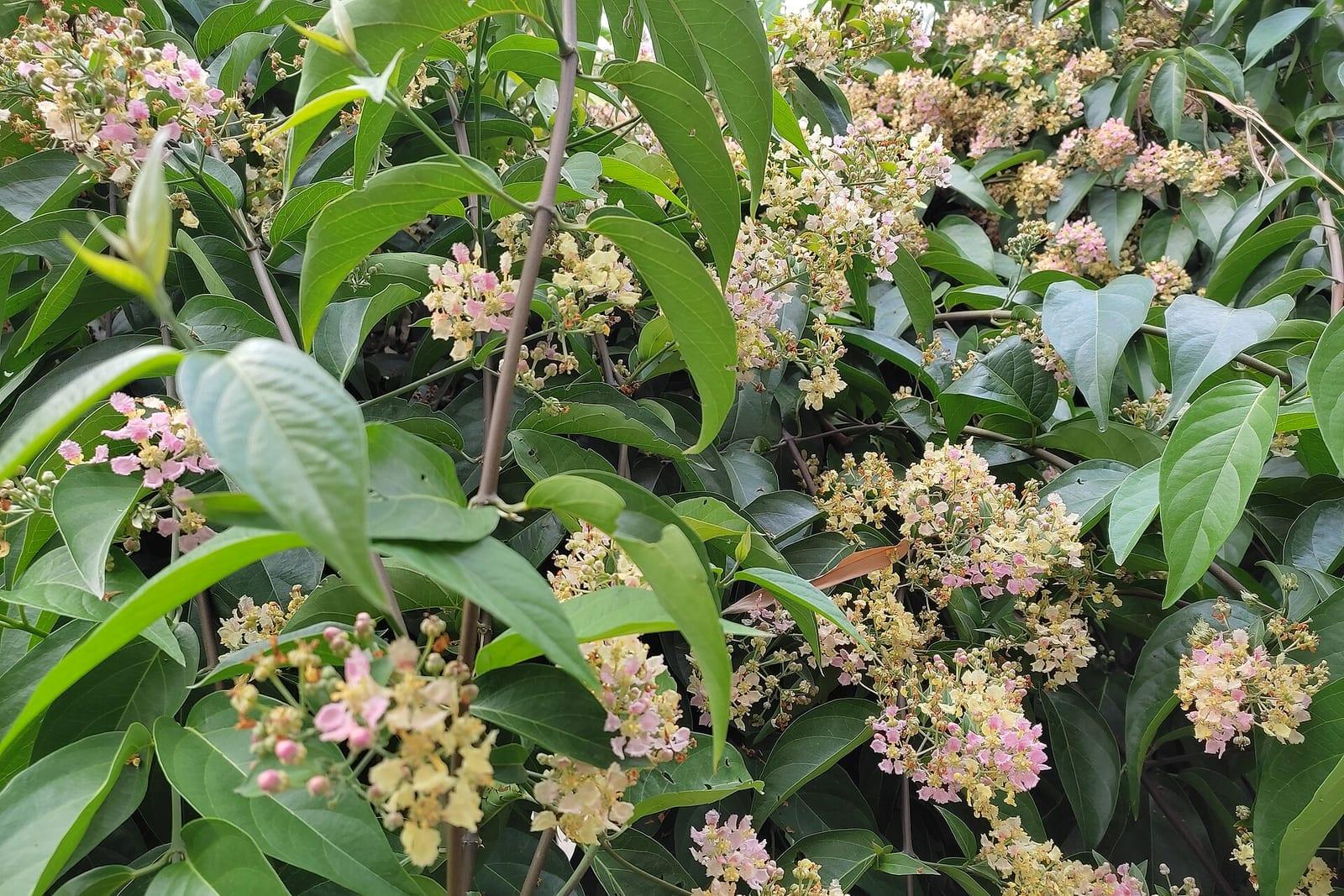
Photo: Maria Gabriela Yejo · CC0 · via Wikimedia Commons
Ayahuasca and psilocybin are both classic serotonergic psychedelics, but they come from different places, work through different pharmacology, and feel different in the body and mind. Ayahuasca is an Amazonian brew that combines a DMT-containing plant with a vine that makes that DMT orally active, taken in long night-time ceremonies; psilocybin is the compound in certain mushrooms, increasingly studied in clinical trials. Both are controlled substances in most countries, and neither is a casual or do-it-yourself experience. This guide compares them honestly so you can understand the differences, not so you can self-administer either.
If you are weighing these two against each other, you are probably trying to understand what actually separates them beyond the marketing. The short answer: same broad family, very different practical experience. Below we walk through source, chemistry, duration, intensity, the purge, setting, legality, and risk, sticking to what the evidence and traditional knowledge support.
What are ayahuasca and psilocybin?
Ayahuasca is a plant brew with deep roots in the western Amazon, used by numerous Indigenous peoples and, more recently, by syncretic churches such as Santo Daime and the União do Vegetal. It is traditionally prepared by combining the Banisteriopsis caapi vine with a DMT-containing plant, most often the Psychotria viridis (chacruna) leaf.[1] It is not a single chemical but a combination, and the lineages and recipes vary. For a fuller introduction, see our pillar on what ayahuasca is.
Psilocybin is a single compound found in more than 200 species of mushrooms, sometimes called "magic mushrooms." Your body converts psilocybin into psilocin, which is what actually produces the effects.[2] Because it is one isolable molecule, psilocybin is the form most studied in modern clinical research.
The first difference, then, is conceptual. Ayahuasca is a cultural and botanical tradition; psilocybin is a molecule that occurs in nature and is now also synthesised for trials.
Active compounds: DMT plus an MAOI vs psilocybin
This is the most important chemical difference, and it explains almost everything else.
Ayahuasca's main psychoactive is N,N-dimethyltryptamine (DMT), which comes from the leaf. On its own, DMT is broken down in the gut by an enzyme called monoamine oxidase, so swallowing it does very little. The vine, B. caapi, supplies beta-carboline alkaloids (harmine, harmaline, tetrahydroharmine) that act as reversible monoamine oxidase inhibitors (MAOIs). By temporarily blocking that enzyme, they let orally taken DMT reach the brain.[1][3] Those same beta-carbolines may also have psychoactive effects of their own. This two-part design is what makes the difference between ayahuasca and pure DMT, which we explain in ayahuasca, DMT and pharmahuasca.
Psilocybin needs no such helper. After ingestion it converts to psilocin, which acts mainly as an agonist at serotonin 5-HT2A receptors, the same receptor family central to DMT's effects.[2][4] So both substances ultimately work through serotonin signalling, but psilocybin gets there with one compound, while ayahuasca needs the vine to protect the leaf.
How long do the effects last?
Both experiences are long by psychedelic standards, but their shapes differ.
- Ayahuasca: effects typically begin within roughly 30 to 60 minutes and last about 4 to 6 hours, usually run across an evening or overnight ceremony.[1] Note that pure smoked DMT lasts only minutes; it is the MAOI in the brew that stretches the experience into hours.
- Psilocybin: onset is usually around 20 to 60 minutes, with effects lasting about 4 to 6 hours.[2]
So the durations overlap closely. The felt difference is more in texture than in clock time, which brings us to intensity.
How intense is each experience?
Honest answer: both can be gentle or overwhelming, and dose, setting, and the individual matter enormously. That said, people who have done both often describe ayahuasca as more physically demanding and more "directive," with strong somatic sensations, vivid visionary content, and the purge (below). Psilocybin is frequently described as a more gradually unfolding, emotionally textured arc.
These are generalisations, not rules. What an ayahuasca ceremony tends to feel like is covered in what an ayahuasca ceremony feels like, and the loss-of-control question many newcomers worry about is addressed in will I lose control. Neither substance should be assumed to be "easy," and a difficult psychological experience is possible with both.
Same receptor family, very different ride: one is a brewed tradition taken overnight, the other a single compound studied in clinics.
The purge: a key difference
The purge, which can mean vomiting, diarrhoea, sweating, shaking, or crying, is a well-known and culturally meaningful feature of ayahuasca. In many traditions it is understood as part of the cleansing, and physiologically it may relate to serotonergic activity in the gut.[1] Most retreats provide a bucket and treat purging as expected, not as a problem. We explain it in the ayahuasca purge explained.
Psilocybin can cause nausea, and vomiting does happen, but a ritualised, expected purge is not a defining part of the mushroom experience the way it is with ayahuasca. Nausea is among the most common reported adverse effects in psilocybin trials, usually mild to moderate and short-lived.[5] If physical purging is a significant concern for you, this is a meaningful point of difference.
Setting and ceremony
Ayahuasca is almost always taken in a group ceremony led by a facilitator or shaman, often at night, often over multiple sessions across a retreat, with dietary preparation (the dieta) beforehand.[1] The container, songs (icaros), and guidance are integral to the tradition, not optional extras. If you are exploring this route, our guides on how to choose a retreat safely and what to expect at a retreat are good starting points.
Psilocybin's modern use spans a wider range: supervised clinical trials, legal therapeutic frameworks in a few jurisdictions, traditional Mazatec mushroom ceremonies in Mexico, and informal use. Clinical models emphasise preparation, a supported dosing session, and integration afterwards. Both substances are widely regarded as benefiting from skilled support and from integration, the work of making sense of the experience afterwards, which we cover in making it last.
Legal status: both are controlled
Neither substance is broadly legal for recreational use, and this is non-negotiable to understand before going further.
In the United States, DMT (and therefore ayahuasca) and psilocybin are both Schedule I under the Controlled Substances Act, meaning no accepted medical use under federal law and a high potential for abuse.[6] A narrow set of religious organisations hold court-recognised or DEA-granted exemptions to use ayahuasca as a sacrament, beginning with the Supreme Court's 2006 Gonzales v. O Centro Espírita Beneficente União do Vegetal decision; these do not extend to individuals using ayahuasca outside a recognised church.[6] Separately, a few US jurisdictions have moved to regulate supervised psilocybin services at the state level.
In the United Kingdom, DMT and psilocybin are both Class A drugs under the Misuse of Drugs Act 1971 and Schedule 1 under the Misuse of Drugs Regulations, with possession carrying serious penalties.[7] Laws differ by country and change over time, so check current local law rather than relying on any single source. We track this in where ayahuasca is legal.
Risk profiles: how they differ
Both are physiologically active drugs, not harmless, and both carry psychological risk. The risk profiles are not identical.
Ayahuasca-specific risks centre on the MAOI. Combining ayahuasca with certain antidepressants (especially SSRIs, SNRIs, and other MAOIs), some other medications, stimulants, or certain foods can raise the risk of dangerous reactions, including serotonin toxicity and sharp blood-pressure spikes.[3] Ayahuasca also transiently raises heart rate and blood pressure, which is why cardiovascular conditions are taken seriously; see ayahuasca and your heart and the medication detail in ayahuasca and antidepressants.
Psilocybin does not carry the same MAOI interaction profile, and in supervised trials most physical adverse effects (nausea, headache, transient blood-pressure changes) have been mild to moderate and short-lived, with serious adverse events uncommon in screened populations.[5] That is a controlled-trial picture with careful screening, not a guarantee for unscreened, unsupervised use.
Shared psychological risks apply to both. A frightening or destabilising experience is possible, and a personal or family history of psychosis or bipolar disorder is a widely cited contraindication for serotonergic psychedelics. See who should not take ayahuasca and can ayahuasca trigger psychosis; the same caution applies to psilocybin.
What the research currently shows
Both substances are being studied, and it is important to be precise about how far that research has come. Psilocybin has the larger and more advanced body of clinical trial data, including studies in treatment-resistant and major depression, with some regulatory bodies granting breakthrough-therapy designation to psilocybin-based candidates. Results are promising but the field is still maturing, and these are investigational treatments delivered with therapeutic support, not approved over-the-counter medicines.[4][5] Ayahuasca research is earlier-stage and smaller, with preliminary findings of interest but fewer large controlled trials.
Neither should be described as a proven cure for any condition. Early research, traditional knowledge, and individual anecdote are three different kinds of evidence, and honest comparison keeps them distinct.
So which is "right" for someone?
This article deliberately does not tell you to take either, or which to choose for self-administration. The useful takeaways are these: ayahuasca is a brewed Amazonian tradition built on a DMT-plus-MAOI design, taken in long ceremonies, with a defining purge and significant medication-interaction risks; psilocybin is a single mushroom compound with a closely overlapping duration, a gentler interaction profile, and a larger clinical-research base. Both are serious, both are controlled, and both reward careful preparation, honest medical screening, and good integration. If you are researching either, our resources page points to independent organisations and support.
If you are struggling with your mental health right now, please reach out to a qualified professional or, in the UK, the Samaritans on 116 123. A psychedelic experience is not a substitute for support during a crisis.
Sources
- [1]Toxicokinetics and Toxicodynamics of Ayahuasca Alkaloids (DMT, Harmine, Harmaline, Tetrahydroharmine), PMC, Peer-reviewed review of ayahuasca's constituent plants, DMT, beta-carboline MAOIs, effects and duration. ↩
- [2]Psilocybin, Wikipedia (citing pharmacology literature), Overview of psilocybin as a prodrug of psilocin, 5-HT2A agonism, onset ~20-50 min and ~4-6 h duration. ↩
- [3]The pharmacological interaction of compounds in ayahuasca: a systematic review, PMC, Systematic review of MAOI mechanism and interaction risks, including serotonergic and cardiovascular concerns. ↩
- [4]Neurobiological research on DMT and its potentiation by MAO inhibition, PMC, Review of DMT/MAOI pharmacology and 5-HT2A mechanism shared with other serotonergic psychedelics. ↩
- [5]Meta-analysis: psilocybin for depression and anxiety, adverse effects, PMC, Systematic review and meta-analysis of psilocybin RCTs; most adverse effects mild/moderate and short-lived. ↩
- [6]United States legal situation of ayahuasca, ICEERS, DMT Schedule I status, Gonzales v. UDV (2006) religious exemption, and limits of those exemptions. ↩
- [7]Legal status of psychedelic drugs in the United Kingdom, Wikipedia, DMT and psilocybin classified as Class A / Schedule 1 under UK law. ↩
Frequently asked questions
- Is ayahuasca stronger than psilocybin?
- Neither is reliably 'stronger'; intensity depends on dose, setting, and the individual. People who have tried both often describe ayahuasca as more physically demanding and visionary, and psilocybin as a more gradually unfolding emotional arc, but both can be gentle or overwhelming.
- Do ayahuasca and psilocybin work the same way in the brain?
- They overlap. Both ultimately act on serotonin 5-HT2A receptors. The key difference is that ayahuasca's DMT only works orally because the vine's MAOIs block the enzyme that would otherwise break it down, while psilocybin converts to psilocin and is active on its own.
- Why does ayahuasca make you vomit but mushrooms usually don't?
- Purging is a recognised, culturally meaningful part of ayahuasca and may relate to serotonergic activity in the gut. Psilocybin can cause nausea and occasional vomiting, but it does not involve a ritualised, expected purge in the same way.
- Are ayahuasca and psilocybin legal?
- In most countries, no. In the US, DMT (ayahuasca) and psilocybin are both Schedule I federally; a few religious groups hold narrow ayahuasca exemptions and some US states regulate supervised psilocybin. In the UK, both are Class A. Always check current local law.
- Which has more scientific research behind it?
- Psilocybin has the larger and more advanced clinical trial base, including depression studies and breakthrough-therapy designations for some candidates. Ayahuasca research is earlier-stage and smaller. Neither is a proven cure, and both are still being studied.
- Is one safer than the other?
- They carry different risks. Ayahuasca's MAOI creates significant interaction risks with antidepressants, some medications, stimulants, and certain foods, plus cardiovascular effects. Psilocybin lacks that interaction profile, but both carry psychological risk. Only a qualified clinician can assess your personal situation.
What to read next
The medicine
Ayahuasca Visions: What People Actually See (and Why)
Ayahuasca visions explained: geometry, serpents, ancestors, life review, why they vary, why many see little, and the neuroscience, honestly framed.
· 8 min read
The medicine
10 Common Ayahuasca Myths and Misconceptions
Ten common ayahuasca myths, corrected with honest, sourced facts: cure claims, "natural means safe," visions, purging, addiction, legality and more.
· 7 min read
The medicine
What Does an Ayahuasca Ceremony Actually Feel Like?
An honest, vivid walk-through of an Ayahuasca ceremony, setting, the brew, onset, visions, the purge, icaros, and the comedown, and why it varies so much.
· 9 min read