A Brief History of Ayahuasca: From the Amazon to the West
From ancient Amazonian roots and Brazilian churches to the modern tourism boom: an honest history of Ayahuasca, foregrounding Indigenous knowledge-holders.
·
7 min read
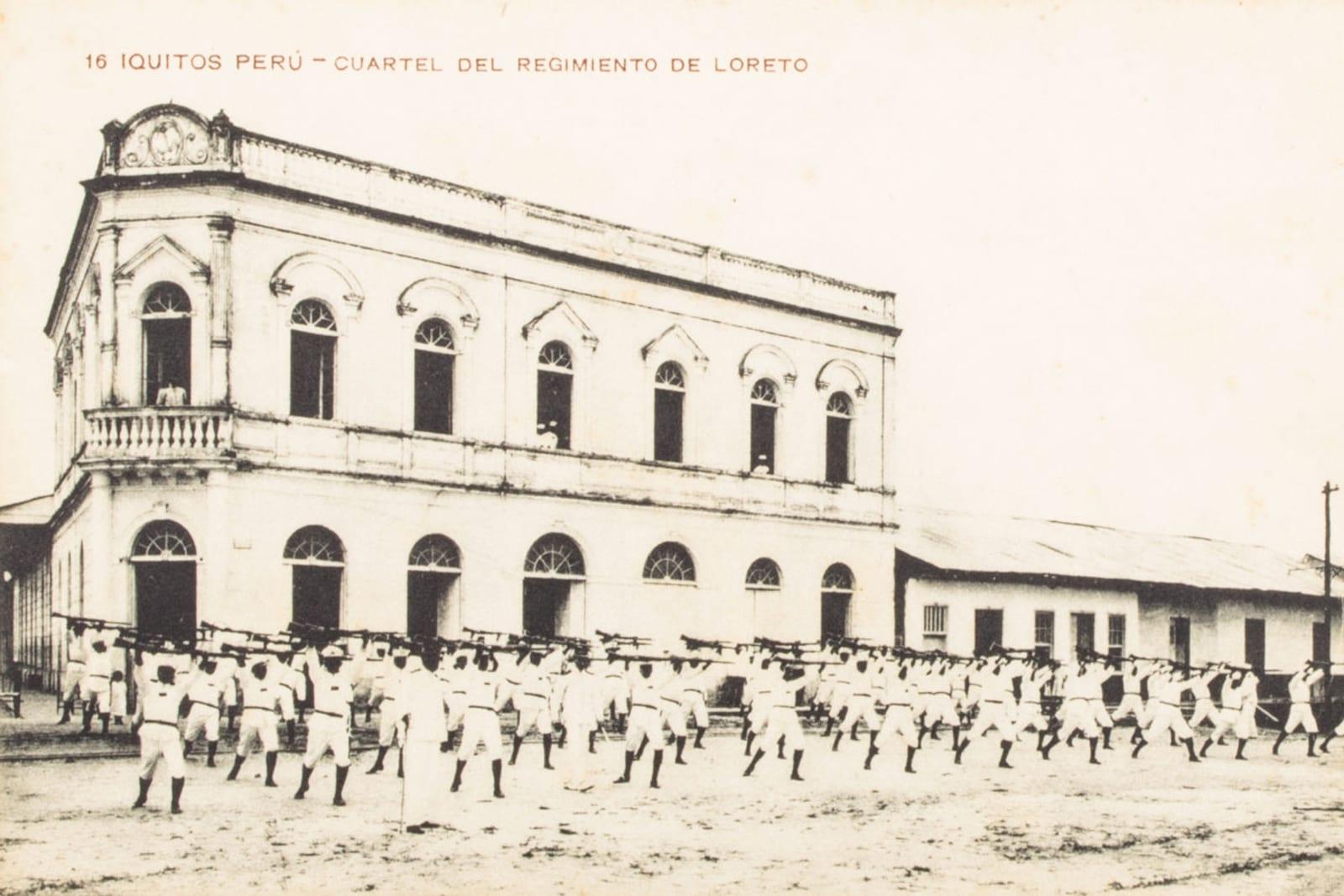
Photo: Lira y Gil collection. · CC BY-SA 4.0 · via Wikimedia Commons
Ayahuasca is an Amazonian psychoactive brew with deep roots among Indigenous peoples of the western Amazon, where it has long been used for healing, divination and ritual. The hard archaeological evidence for its antiquity is thinner than popular accounts suggest, but it reaches back at least a thousand years. From there the story moves through mestizo folk healing, two Brazilian churches that made it a sacrament, a 20th-century Western fascination, and today's contested global boom in Ayahuasca tourism.
What is Ayahuasca and where does the name come from?
Ayahuasca is a bitter brew most often made by combining the Banisteriopsis caapi vine with a DMT-containing leaf, traditionally Psychotria viridis (chacruna). The vine supplies harmala alkaloids that make the DMT orally active; without them, stomach enzymes would break it down. (For the pharmacology in plain language, see our pillar guide to what Ayahuasca is and our explainer on the difference between Ayahuasca, DMT and pharmahuasca.)
The word itself is usually traced to Quechua: aya (soul, spirit, or the dead) and waska (vine or rope), giving the familiar "vine of the soul", though "vine of the dead" is an equally defensible reading.[1] That ambiguity is fitting. But the Quechua name can mislead: Ayahuasca is not one tradition with one vocabulary. Dozens of Amazonian peoples use it under their own names, yagé among Colombian and Ecuadorian groups, natem, nixi pae, and others, each with distinct cosmologies, songs and ritual rules.
How old is Ayahuasca? Honest answer on the archaeology
You will often read that Ayahuasca is "thousands of years old." Treat that claim carefully. Plant brews leave little behind, and oral traditions, however deep, are not the same as datable evidence.
The strongest physical proof to date comes from a leather ritual bundle recovered from a cave in the Bolivian Andes. Researchers led by archaeologist Melanie Miller radiocarbon-dated the bundle to roughly A.D. 900–1170 and, using chemical analysis, detected traces of multiple psychoactive substances, including harmine and DMT, the two pharmacological ingredients that define Ayahuasca, alongside bufotenine and cocaine.[2] Published in PNAS in 2019, it is the earliest direct chemical evidence that ancient South Americans were combining plants to produce an ayahuasca-like preparation.
The honest summary: Ayahuasca is genuinely ancient, demonstrably pre-Columbian, and culturally profound, and the precise origins remain uncertain. Anyone claiming a specific multi-millennial date is going beyond the evidence.
Indigenous Amazonian traditions: many lineages, not one
The most important thing to understand is that Ayahuasca did not emerge from a single culture. It belongs to a mosaic of Indigenous peoples across Peru, Brazil, Colombia, Ecuador and Bolivia, the Shipibo-Conibo, Asháninka, Cofán, Siona, Secoya, Huni Kuin (Kaxinawá) and many more.
These are not interchangeable. Ritual purpose ranges from healing and diagnosis to hunting magic, conflict resolution and contact with the spirit world. The songs differ too: among Shipibo healers, the icaros that guide a ceremony are themselves the medicine's "language." Flattening all of this into a single "ancient shamanic tradition" erases the specificity that Indigenous knowledge-holders have maintained, often under enormous pressure from colonisation, missionaries and extractive industry.
There is no single, original Ayahuasca tradition, there are many living ones, each with its own custodians.
Mestizo vegetalismo: the folk-healing bridge
By the 19th and 20th centuries, especially around the rubber boom and the growth of Amazonian river towns like Iquitos and Pucallpa, Ayahuasca use spread beyond strictly Indigenous settings into mestizo vegetalismo, a folk-healing tradition practised by vegetalistas or ayahuasqueros who learned from plant "teachers" and from Indigenous mentors.
Vegetalismo blends Indigenous Amazonian practice with Catholic imagery, European folk magic and local spiritism. It is the strand most Western visitors actually encounter, because many commercial retreats descend from this mestizo lineage rather than from a specific Indigenous nation. Recognising that distinction matters: a ceremony marketed as "ancient Amazonian shamanism" is frequently a 20th-century mestizo form, which is a legitimate tradition in its own right but not the same thing.
The Brazilian Ayahuasca churches: Santo Daime and the UDV
In the early 20th century Ayahuasca took an unexpected turn into organised, urban religion. In the Brazilian state of Acre, Raimundo Irineu Serra (Mestre Irineu), an Afro-Brazilian rubber tapper, founded what became Santo Daime in the 1930s, a syncretic faith fusing the brew (which adherents call Daime) with Christianity, African-diaspora religion and Amazonian practice, expressed through collective hymns and disciplined ritual.[3]
A second major church, the União do Vegetal (UDV), was founded by José Gabriel da Costa (Mestre Gabriel) in 1961, organised around Christian-inflected teaching and the sacramental drinking of hoasca.
These churches did something Indigenous and mestizo traditions had not: they codified Ayahuasca into formal congregations, took it to Brazil's cities, and eventually carried it abroad. Brazil recognised religious Ayahuasca use in the 1980s. The churches also became the vehicle for Ayahuasca's most consequential legal test in the West, covered below.
The 20th-century Western "discovery"
Outsiders had noticed Ayahuasca far earlier. The English botanist Richard Spruce observed Tukano people of the upper Rio Negro using caapi in 1851, collected specimens, and published the first careful ethnobotanical account in his 1873 Notes of a Botanist on the Amazon and Andes.[4] "Discovery" is the wrong word, Indigenous peoples had used it for centuries, but Spruce marks the start of Western scientific documentation.
The mid-20th century brought wider attention: chemists isolated the harmala alkaloids; ethnobotanist Richard Evans Schultes catalogued Amazonian plant use; and Beat-era writers, notably William Burroughs and Allen Ginsberg in their Yage Letters, seeded a counter-cultural fascination. By the 1990s and 2000s, anthropologists, psychonauts and a growing therapeutic-research interest had pushed Ayahuasca firmly into Western awareness.
Globalisation and the ayahuasca-tourism era
The current era is defined by movement and money. Since the 2000s, tens of thousands of Westerners have travelled to Peru, Brazil, Colombia and Ecuador seeking healing, insight or relief from depression, trauma and addiction, and Ayahuasca circles have sprouted in Europe and North America.
This boom carries real tensions:
- Commercialisation. Practices once embedded in community and reciprocity are repackaged for paying tourists, sometimes stripped of the safeguards and context that made them work.
- Reciprocity and rights. Indigenous custodians frequently see little benefit from a global market built on their knowledge. Initiatives such as the Chacruna Institute's Indigenous Reciprocity Initiative exist precisely because reciprocity is so often missing.[5]
- Safety and abuse. Rapid, unregulated growth has produced under-trained "facilitators," overcrowded venues, and documented cases of harm including sexual abuse. Screening, medical risk and provider quality vary enormously.
Why this history matters now
Ayahuasca's journey "from the Amazon to the West" is not a clean line from primitive past to modern wellness. It is a story of many Indigenous traditions, a mestizo folk-healing bridge, two Brazilian churches, a century of Western documentation, and a present moment in which a sacred and medically serious practice has become a global commodity. The legal landmark of that arc came in 2006, when the U.S. Supreme Court ruled unanimously in Gonzales v. O Centro Espírita Beneficente União do Vegetal that the UDV could use its Ayahuasca sacrament under the Religious Freedom Restoration Act.[6]
Understanding where Ayahuasca comes from, and who its true knowledge-holders are, is the first step toward engaging with it honestly, safely and with respect.
Sources
- [1]Wikipedia: Ayahuasca (etymology and overview), Quechua etymology (aya + waska) and general background on the brew and its traditions. ↩
- [2]Miller et al., 'Chemical evidence for the use of multiple psychotropic plants in a 1,000-year-old ritual bundle from South America,' PNAS (2019), Primary study; radiocarbon date ~A.D. 900–1170 and detection of harmine and DMT among other compounds. Summary: UC Berkeley research news, https://vcresearch.berkeley.edu/news/ayahuasca-fixings-found-1000-year-old-andean-sacred-bundle ↩
- [3]Encyclopedia.com: Santo Daime, Founding of Santo Daime by Mestre Irineu in 1930s Acre; syncretic Christian–Amazonian–African elements. ↩
- [4]Britannica: Ayahuasca, Richard Spruce's 1851 observation of caapi use and his 1873 ethnobotanical account; Western documentation history. ↩
- [5]Chacruna Institute: Indigenous Reciprocity Initiative, Organisation working on reciprocity between Western Ayahuasca use and Indigenous communities; context for commercialisation ethics. ↩
- [6]Gonzales v. O Centro Espírita Beneficente União do Vegetal, 546 U.S. 418 (2006), Justia, Unanimous U.S. Supreme Court ruling permitting UDV sacramental Ayahuasca use under RFRA. ↩
Frequently asked questions
- How old is Ayahuasca?
- The strongest physical evidence is a ritual bundle from the Bolivian Andes radiocarbon-dated to roughly A.D. 900–1170, which contained harmine and DMT, the chemical signature of an ayahuasca-like brew. That makes the practice at least a thousand years old, though its true origins are older and uncertain, and popular claims of a precise multi-millennial age go beyond the evidence.
- What does the word 'Ayahuasca' mean?
- It comes from Quechua: aya (soul, spirit or the dead) and waska (vine or rope), usually translated as 'vine of the soul,' though 'vine of the dead' is an equally valid reading. Many Indigenous peoples use entirely different names, such as yagé, natem and nixi pae.
- Who originally used Ayahuasca?
- Many distinct Indigenous peoples of the western Amazon, including the Shipibo-Conibo, Asháninka, Cofán, Siona and Huni Kuin, among others, each with their own ceremonies, songs and purposes. It is not a single tradition, and later mestizo vegetalismo blended Indigenous practice with Catholic and folk elements.
- What are Santo Daime and the UDV?
- They are Brazilian syncretic churches that use Ayahuasca as a religious sacrament. Santo Daime was founded by Mestre Irineu in 1930s Acre, and the União do Vegetal (UDV) was founded by Mestre Gabriel in 1961; both combine the brew with Christian and Amazonian elements.
- When did Ayahuasca reach the West?
- Western scientific documentation began with botanist Richard Spruce, who observed caapi use in 1851 and published an account in 1873. Wider attention came in the 20th century through ethnobotanists, chemists and Beat-era writers, and the global tourism boom took off in the 2000s.
- Is Ayahuasca tourism ethical?
- It's contested. Critics point to commercialisation of sacred practices, Indigenous custodians seeing little benefit from a market built on their knowledge, and documented safety failures including under-trained facilitators and abuse. Reciprocity initiatives exist precisely because fair benefit-sharing is so often absent.
What to read next
The medicine
Ayahuasca Visions: What People Actually See (and Why)
Ayahuasca visions explained: geometry, serpents, ancestors, life review, why they vary, why many see little, and the neuroscience, honestly framed.
· 8 min read
The medicine
10 Common Ayahuasca Myths and Misconceptions
Ten common ayahuasca myths, corrected with honest, sourced facts: cure claims, "natural means safe," visions, purging, addiction, legality and more.
· 7 min read
The medicine
What Does an Ayahuasca Ceremony Actually Feel Like?
An honest, vivid walk-through of an Ayahuasca ceremony, setting, the brew, onset, visions, the purge, icaros, and the comedown, and why it varies so much.
· 9 min read