Where Is Ayahuasca Legal? A Country-by-Country Overview
Is Ayahuasca legal? A clear, well-sourced country-by-country overview of DMT laws, the UN treaty, religious exemptions and grey zones. Not legal advice.
By Elena Marsh
·
7 min read
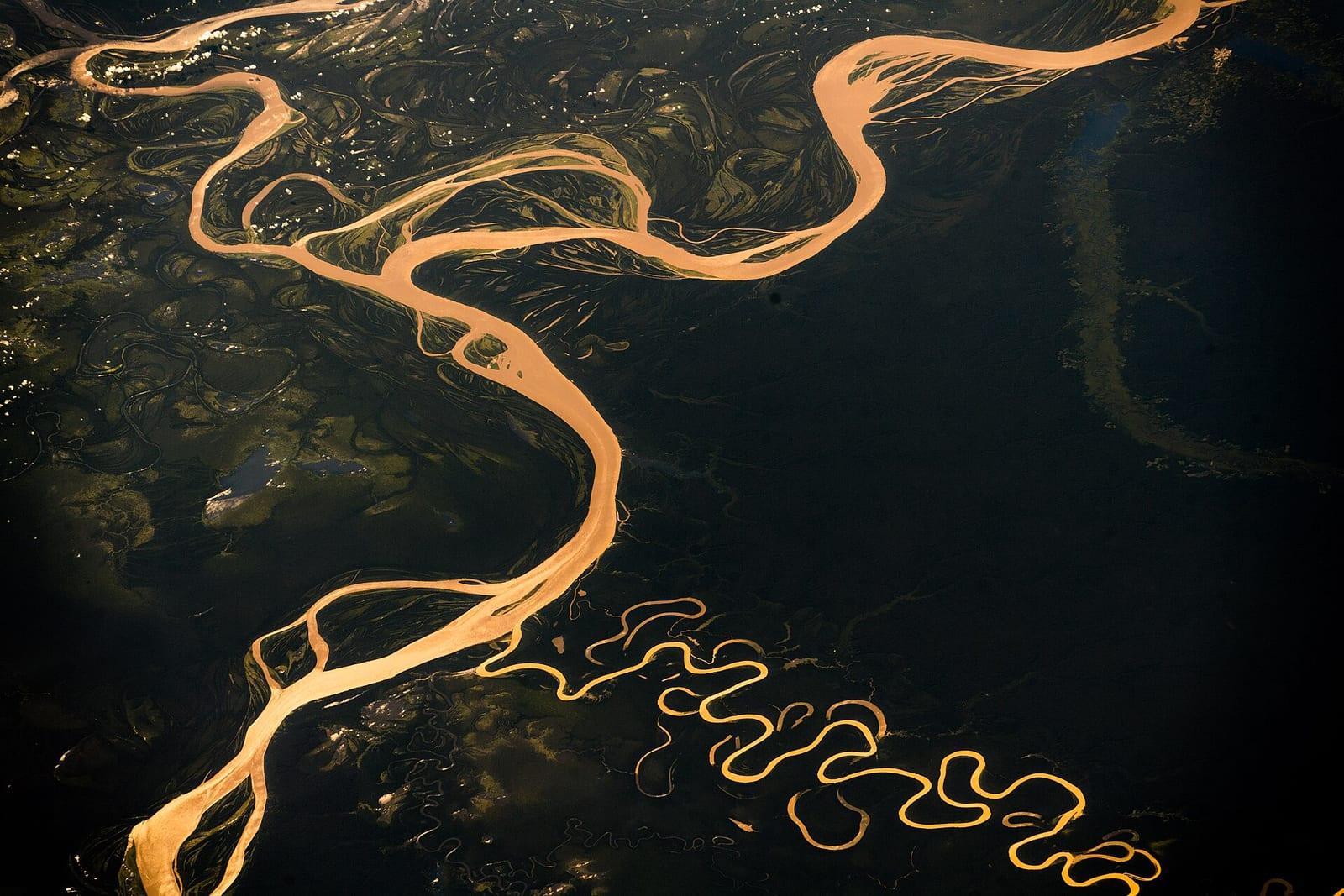
Photo: Alexander Gerst · CC BY-SA 2.0 · via Wikimedia Commons
The short answer is that there is no single answer. DMT, the main psychoactive compound in Ayahuasca, is a controlled substance almost everywhere, yet the Ayahuasca brew and the plants it is made from occupy a confusing legal grey zone that differs sharply from country to country. A handful of nations explicitly protect religious or traditional use; many more neither clearly permit nor clearly ban it; and the law where you live may be entirely different from the law where a retreat operates.
This article is a general, plain-English overview of how the law treats Ayahuasca around the world. It is not legal advice, it does not cover every jurisdiction, and the situation changes, sometimes through a single court ruling. If you are weighing a real decision, treat what follows as a starting point for questions to a qualified lawyer in the relevant country, not as a green light.
Why Ayahuasca's legal status is so confusing
Most of the confusion traces back to one distinction: the difference between a molecule and a plant preparation.
DMT (N,N-dimethyltryptamine) is listed in Schedule I of the 1971 UN Convention on Psychotropic Substances, the international treaty that frames most national drug laws.[1] That listing pushes countries to control DMT tightly. In the United States it is a Schedule I controlled substance; in the United Kingdom it is a Class A drug under the Misuse of Drugs Act 1971.[2] If you want to understand the pharmacology behind that classification, see our explainer on the difference between Ayahuasca, DMT and pharmahuasca.
The twist is that the international treaty controls the compound, not the plants that naturally contain it. The International Narcotics Control Board (INCB), the body that monitors the conventions, has stated that the Ayahuasca brew itself is not scheduled under the international drug-control treaties, and that the plants used to make it are not under international control.[3] That gap is exactly where national interpretations diverge: some governments treat any DMT-containing liquid as a banned substance, while others read the brew as a distinct, unscheduled preparation.
Where Ayahuasca has the clearest legal protection
A small number of countries have moved from prohibition toward explicit regulation, usually framed around religious freedom or cultural heritage rather than recreational access.
Brazil is the clearest example. After decades of shifting policy, the national drug-policy council (CONAD) issued Resolution 01/2010, which set out rules and ethical principles for the religious and ritual use of Ayahuasca and recognised it as part of the country's cultural heritage.[4] Brazil is home to the major Ayahuasca churches, Santo Daime and the União do Vegetal (UDV), and ceremonial use within those traditions operates within a recognised framework.
Peru took a heritage route. In 2008 the National Institute of Culture declared the traditional use of Ayahuasca part of the nation's cultural patrimony, citing its role in indigenous Amazonian ritual rather than treating it as merely a hallucinogen.[5] This is a major reason Peru is the most prominent retreat destination, though "cultural heritage" recognition is not the same thing as a clean, modern regulatory licence, the practical and legal realities on the ground are more nuanced than the headline suggests.
These protections sit on top of a long indigenous history that long predates any of these statutes; our brief history of Ayahuasca traces that lineage.
The Ayahuasca brew is not scheduled under the international drug-control conventions, but that has not stopped individual countries from prosecuting it as a DMT-containing substance.
Religious exemptions: the United States and the RFRA cases
The United States offers perhaps the most-studied example of a carve-out rather than a general allowance.
In Gonzales v. O Centro Espírita Beneficente União do Vegetal (2006), the US Supreme Court ruled unanimously that the federal government could not block the UDV church from using its sacramental Ayahuasca tea. The Court applied the Religious Freedom Restoration Act (RFRA) and found the government had not shown a compelling enough interest to justify the substantial burden on the church's religious practice.[6] A separate line of litigation later extended similar protection to branches of the Santo Daime church.
The critical point: these are narrow, group-specific exemptions, not a finding that Ayahuasca is legal for the public. Outside a recognised religious body with such protection, DMT remains a Schedule I substance under US federal law. Separately, a patchwork of US cities, including Oakland and Santa Cruz, have passed decriminalisation resolutions making personal possession of entheogenic plants the lowest law-enforcement priority.[7] Decriminalisation is not legalisation, and a local resolution does not override federal law.
Countries where the law has tightened: the Netherlands
The Netherlands is a cautionary tale about how quickly the picture can change. For roughly 17 years, a Santo Daime church there operated under a religious exemption first recognised around 2001. Then in 2019 the Dutch Supreme Court ruled that Ayahuasca falls under the country's hard-drug laws and that importing it is illegal, accepting that the ban did burden religious freedom, but holding that protecting public health justified it.[8] A jurisdiction that had been a reference point for tolerant policy became, with one judgment, a clear prohibition.
Much of the world sits in a legal grey zone
Beyond the clear-cut cases, most countries fall into ambiguity. Ayahuasca and its source plants are often not specifically named in law, while the DMT they contain is controlled, leaving police, prosecutors and judges to interpret whether the brew counts as a banned substance.[1]
- United Kingdom: DMT is Class A, but there is no settled consensus on whether the brew is automatically illegal because it contains DMT. There are no recognised religious exemptions, and prosecutions have occurred.[2]
- Spain: No explicit framework, yet among the highest number of recorded legal incidents in recent years, including prosecutions for possession and transport.[3]
- France and Russia: Among the stricter regimes, France has moved to control the plants used in the brew, and Russia prohibits plants containing scheduled substances.[3]
- Elsewhere: Many countries simply have no specific rule, which means uncertainty rather than safety, silence in the statute book is not permission.
For a country-level snapshot that is updated over time, the Wikipedia overview of Ayahuasca's legal status is a useful (if necessarily imperfect) reference.[9]
What this means if you are considering a retreat
The practical takeaway is uncomfortable but important: legality is not portable. Drinking Ayahuasca in a country that protects ceremonial use does not make it lawful to carry the brew home, and a retreat operating openly abroad tells you little about your own country's law. Importing or possessing Ayahuasca on return can carry serious penalties even when the ceremony itself was lawful where it happened.
Legal risk is only one of several things to weigh. The health and psychological considerations matter at least as much, see our pillar guides on what Ayahuasca is and on safety and contraindications, and if you are choosing a centre, our guide on how to choose a retreat safely. The legal status of the destination is one of the questions worth asking any retreat directly.
Sources
- [1]ICEERS, Ayahuasca and the Law (legal status overview), Recognised NGO authority on Ayahuasca law; covers the DMT/brew distinction, INCB position, and the permitted/prohibited/ambiguous country categories. ↩
- [2]ICEERS, England and Wales legal information, Details DMT as a Class A drug under the UK Misuse of Drugs Act 1971 and the lack of consensus on the brew's status. ↩
- [3]INCB / 1971 UN Convention position on Ayahuasca (via ICEERS), International Narcotics Control Board statement that the Ayahuasca brew and its source plants are not scheduled under the international conventions, while DMT is. ↩
- [4]ICEERS, Brazil legal information (CONAD Resolution 01/2010), Brazil's regulation of religious/ritual Ayahuasca use and recognition as cultural heritage. ↩
- [5]Drugs, Religion, and Cultural Heritage: Public Policies on Ayahuasca in Brazil (and Peru INC Resolution 836/2008), Academic account of Brazil's regulatory evolution and Peru's 2008 cultural-heritage declaration. ↩
- [6]Gonzales v. O Centro Espírita Beneficente União do Vegetal, 546 U.S. 418 (2006), US Supreme Court ruling upholding the UDV church's sacramental Ayahuasca use under the Religious Freedom Restoration Act. ↩
- [7]NPR, Oakland effectively decriminalizes entheogenic plants (2019), Example of US city-level decriminalisation of entheogenic plants and fungi, distinct from legalisation. ↩
- [8]DutchNews, Hallucinogenic tea Ayahuasca is illegal, Dutch supreme court rules (2019), 2019 Dutch Supreme Court ruling that Ayahuasca falls under hard-drug laws, ending the Santo Daime exemption. ↩
- [9]Wikipedia, Legal status of Ayahuasca by country, General, regularly updated country-by-country reference for orientation; verify against primary sources. ↩
Frequently asked questions
- Is Ayahuasca legal in the United States?
- For the general public, no, DMT is a Schedule I controlled substance under US federal law. The only clear exceptions are specific religious organisations (such as the UDV and certain Santo Daime branches) that have won protection under the Religious Freedom Restoration Act. Some cities have decriminalised possession, but decriminalisation is not legalisation and does not override federal law.
- Is Ayahuasca legal in the UK?
- DMT is a Class A drug under the Misuse of Drugs Act 1971, and the UK recognises no religious exemptions. While the brew and its source plants are not separately named in law, there is no settled consensus on whether Ayahuasca is automatically illegal because it contains DMT, and prosecutions have occurred. This is general information, not legal advice.
- Why is Ayahuasca legal in Brazil and Peru but not in many other countries?
- Both countries took routes grounded in their own history rather than recreational allowance. Brazil regulates religious and ritual use through a 2010 national drug-policy resolution and recognises it as cultural heritage, while Peru declared traditional Ayahuasca use part of its cultural patrimony in 2008. These frameworks reflect long-standing indigenous and religious practice within those nations.
- Is it legal to bring Ayahuasca home from a retreat abroad?
- Generally no, and doing so can carry serious penalties. Legality is not portable: even if a ceremony is lawful in the country where it takes place, importing or possessing the brew on your return is typically governed by your home country's drug laws, where DMT is usually controlled. Always check with a qualified lawyer in the relevant jurisdiction.
- What is the difference between decriminalisation and legalisation of Ayahuasca?
- Decriminalisation usually means local authorities make possession a low enforcement priority, so people are less likely to be arrested, but the substance remains unlawful and commercial supply is not authorised. Legalisation would create a regulated legal framework for use. Most US city measures are decriminalisation, not legalisation, and they do not override state or federal law.
- Does the UN treaty make Ayahuasca illegal worldwide?
- Not directly. The 1971 UN Convention schedules DMT, the active compound, but the International Narcotics Control Board has stated that the Ayahuasca brew and the plants used to make it are not scheduled under the international conventions. That gap is why countries interpret the brew's status so differently.
What to read next
Choosing a retreat
Ayahuasca Aftercare: The First Days and Weeks Home
Ayahuasca aftercare for the first days and weeks home: rest, gentle diet, sleep, emotional volatility, postponing big decisions, and when to see a clinician.
· 8 min read
Choosing a retreat
Ayahuasca Integration: How to Make the Insights Last
Ayahuasca integration turns ceremony insight into lasting change. Practices, circles, coaches, red flags, and when to see a licensed therapist, honestly.
· 8 min read
Choosing a retreat
Is Ayahuasca Legal in the UK?
Ayahuasca is effectively illegal in the UK because it contains DMT, a Class A drug under the Misuse of Drugs Act 1971. There is no recognised religious or ceremonial exemption, and the Court of Appeal
· 7 min read