Ayahuasca and Antidepressants: The SSRI, SNRI and MAOI Problem
Ayahuasca contains a functioning MAOI, which is why mixing it with SSRIs, SNRIs, or other MAOIs can trigger serotonin syndrome, a predictable, well-documented medical emergency. Here is the mechanism
By Elena Marsh
Medically reviewed by Dr James Okafor
·
7 min read
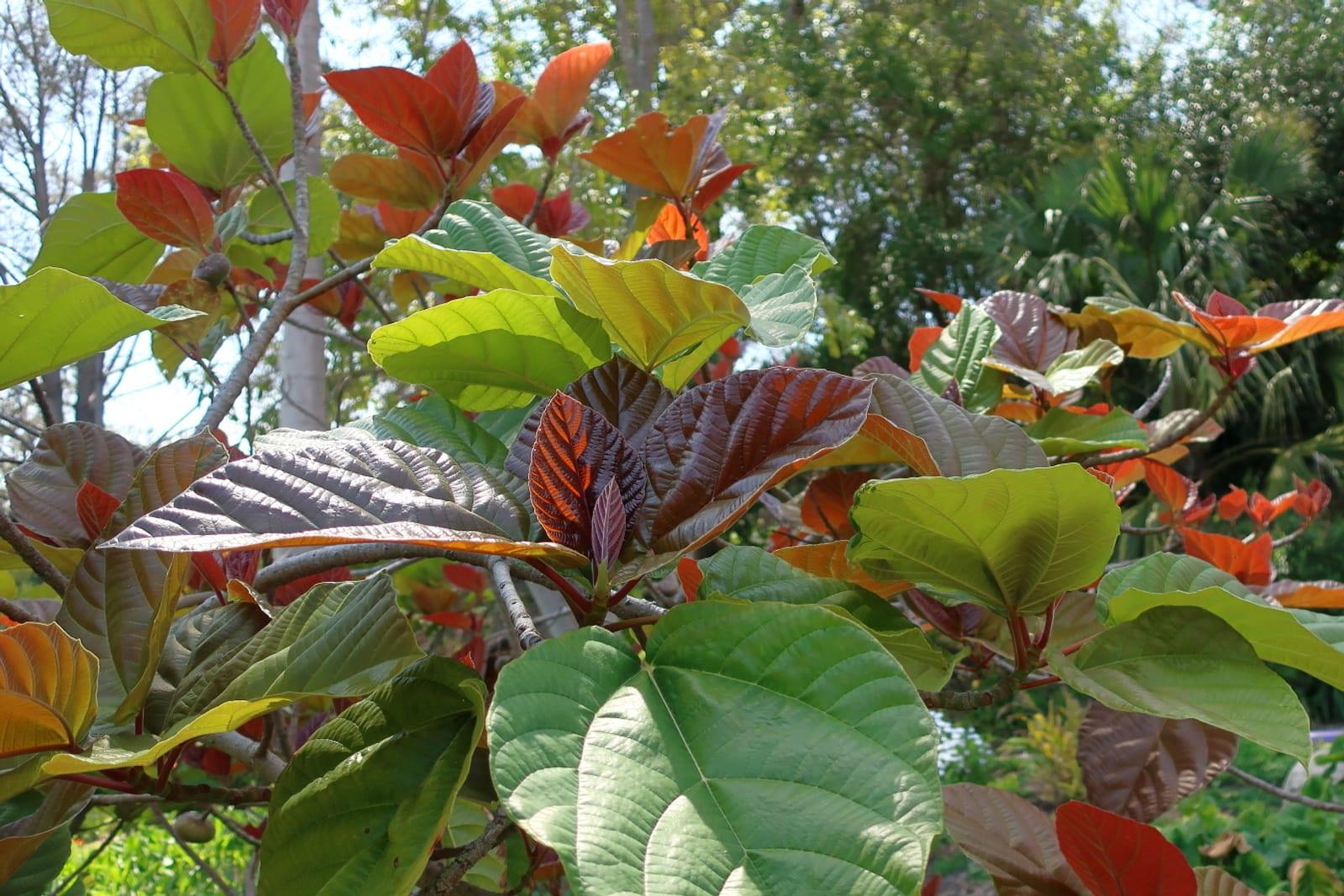
Photo: cultivar413 from Fallbrook, California · CC BY 2.0 · via Wikimedia Commons
Ayahuasca is itself a combination of drugs, and one of those drugs, the harmala alkaloids, belongs to a class that doctors are trained never to mix with common antidepressants. When that warning is ignored, the result can be serotonin syndrome: a true medical emergency. This is general education, not medical advice, and the only safe path runs through the prescriber who knows your medication and your history.
Of all the ways an Ayahuasca experience can go wrong, the interaction between the brew and serotonergic antidepressants is the most predictable, the best documented, and the most dangerous. It is not a rare fluke. It follows directly from how Ayahuasca is built. Understanding the mechanism is the best way to understand why every credible source, researchers, retreat doctors, harm-reduction services, treats this particular combination as a hard line.
Why Ayahuasca is already a two-drug combination
Ayahuasca is not a single substance. It is a brew that pairs two kinds of plant, and the pharmacology only works because of the pairing.
One ingredient supplies N,N-dimethyltryptamine (DMT), the compound responsible for the visionary effects. On its own, swallowed DMT does almost nothing, because an enzyme in the gut and liver, monoamine oxidase, breaks it down before it can reach the brain.[1]
The second ingredient supplies harmala alkaloids: harmine, harmaline, and tetrahydroharmine. These are the chemistry of the brew that matters most here. They are monoamine oxidase inhibitors (MAOIs), specifically reversible inhibitors of the MAO-A enzyme. By switching off that enzyme, they prevent DMT from being destroyed, allowing enough of it to reach the brain to become active.[1]
So the harmala alkaloids are doing the same job as a class of prescription drug also called MAOIs, once widely used as antidepressants. That single fact, ayahuasca contains a functioning MAOI, is the root of the danger that follows.
How serotonin syndrome happens
Monoamine oxidase is one of the body's main systems for clearing serotonin. When you inhibit it, serotonin is no longer broken down at its usual rate, so levels rise.
Now add a second drug that also raises serotonin, for example a selective serotonin reuptake inhibitor (SSRI) or a serotonin–noradrenaline reuptake inhibitor (SNRI), the two most commonly prescribed antidepressant classes. These work by blocking the reuptake of serotonin, leaving more of it active in the synapse. Stack that on top of an MAOI that has stopped serotonin being cleared, and serotonin can accumulate to toxic levels.[2] The result is serotonin syndrome (also called serotonin toxicity): too much serotonin activity in the nervous system, with effects that range from unpleasant to fatal.
The combination of Ayahuasca's harmala alkaloids with SSRIs was flagged in the research literature as far back as 1998, when researchers warned that it "may induce a serotonin syndrome with potentially grave outcome."[3] More recent pharmacology reviews are blunter still, describing the pairing as capable of producing "a potentially fatal condition" and listing not only SSRIs but other serotonergic drugs, including triptans for migraine, lithium, and certain Parkinson's medications, among the agents that should be avoided alongside Ayahuasca.[2]
The single highest-risk scenario is combining Ayahuasca with another MAOI, including the older MAOI antidepressants (such as phenelzine, tranylcypromine, isocarboxazid, and moclobemide). Two MAOIs together magnify the same effect and have been associated with severe, sometimes fatal reactions.[4]
What serotonin syndrome looks like
Serotonin syndrome typically develops quickly, often within hours of the serotonin levels spiking.[5] Clinicians describe a triad of features: changes in mental state, autonomic (involuntary body-system) instability, and neuromuscular abnormalities.[5] Knowing the signs matters, because early recognition is what gets someone to help in time.
Reported features span a spectrum from mild to life-threatening:[5]
- Mental state: agitation, anxiety, restlessness, confusion, and in severe cases delirium or loss of consciousness.
- Autonomic / body systems: rapid heartbeat, raised blood pressure, heavy sweating, shivering, dilated pupils, diarrhoea, and, most dangerously, a steeply rising body temperature.
- Neuromuscular: tremor, exaggerated reflexes (hyperreflexia), muscle twitching or jerking (clonus), and muscle rigidity.
A clinically important point: ordinary Ayahuasca effects (nausea, sweating, a racing heart, altered perception) can overlap with early serotonin syndrome, which is exactly why the combination is so treacherous, the warning signs can be mistaken for "the medicine working." High fever, muscle rigidity, severe agitation, jerking movements, or collapse are emergencies. They warrant calling emergency services immediately; serotonin syndrome is diagnosed and managed in a hospital, not at a ceremony.
The danger is not exotic or mysterious. It is the entirely predictable result of putting two serotonin-raising drugs into one body at the same time.
Why you must not self-manage your medication
It is tempting to read all this and conclude: then I'll just stop my antidepressant beforehand. This is precisely the decision you must not make alone, and nothing on this page should be read as telling you to do so.
The reason is technical and it is the whole point. Different antidepressants leave the body at very different rates. The standard pharmacological rule of thumb is to allow several half-lives of a drug, and of any active metabolites, to pass before an MAOI is introduced. For most antidepressants that means roughly a week; but fluoxetine, because of its very long-lived active metabolite, can require around five weeks, while some others differ again.[6] Getting this wrong in either direction is hazardous: a too-short gap leaves serotonergic drug still in your system when the MAOI arrives, and abruptly stopping an antidepressant carries its own serious risks, including discontinuation effects and the return or worsening of the condition it was treating.
Only your prescriber knows your specific drug, its half-life, your dose, your history, and whether stopping is advisable at all. Tapering and timing are clinical decisions that require that knowledge. A retreat, however well-intentioned, is not in a position to make them, and a responsible one will not try.
What retreats do, and what honesty requires of you
Credible centres take this interaction seriously. Many require detailed medication disclosure during screening and will decline to accept someone currently taking SSRIs, SNRIs, MAOIs, or other contraindicated serotonergic medications.[7] Some publish medication guidelines and ask that any change to prescribed drugs be arranged with the person's own doctor well in advance, not on arrival. A centre that shrugs off your medications, tells you to stop them without involving your prescriber, or doesn't ask at all is showing you something important about its standards.
That screening only works if it has accurate information. Concealing an antidepressant, or quietly stopping it without medical supervision so you can pass screening, removes the exact safeguard designed to protect you, and recreates the danger this whole article is about. Be fully honest with any centre about everything you take, including over-the-counter products and supplements with serotonergic effects.[2]
The bottom line
Ayahuasca contains an MAOI. SSRIs, SNRIs, and other MAOIs raise serotonin. Combining them can cause serotonin syndrome, which can be fatal. The mechanism is well understood and the warning is long-standing. The safe response is not a do-it-yourself washout schedule from an article on the internet, including this one. It is a conversation with the prescriber who manages your medication, plus full honesty with any centre you are considering.
This article is general education, not medical advice. It cannot tell you whether Ayahuasca is safe for you, and it does not recommend stopping, changing, or timing any medication. Speak with a qualified clinician about your individual situation, and read this alongside our medical disclaimer.
Sources
- [1]Brito-da-Costa AM, et al. Toxicokinetics and Toxicodynamics of Ayahuasca Alkaloids DMT, Harmine, Harmaline and Tetrahydroharmine. Pharmaceuticals (Basel), 2020, Peer-reviewed review: harmala alkaloids reversibly inhibit MAO-A, enabling oral DMT activity; warns combining with SSRIs and other serotonergic drugs can cause a potentially fatal serotonin syndrome. ↩
- [2]Frank C. Recognition and treatment of serotonin syndrome. Canadian Family Physician, 2008;54(7):988-992, Peer-reviewed clinical review: mechanism of serotonin accumulation, the symptom triad, severity spectrum, list of serotonergic drugs to avoid, and the statement that mortality of severe serotonin syndrome is estimated to range from 2% to 12%. ↩
- [3]Callaway JC, Grob CS. Ayahuasca preparations and serotonin reuptake inhibitors: a potential combination for severe adverse interactions. Journal of Psychoactive Drugs, 1998, Early, specific warning that the harmala-alkaloid MAOI activity in Ayahuasca combined with SSRIs may induce serotonin syndrome with potentially grave outcome. ↩
- [4]Sub-Faisal L, et al. Clinically Relevant Drug Interactions with Monoamine Oxidase Inhibitors. (review), PMC, 2022, Combining MAOIs with SSRIs/SNRIs or a second MAOI is dangerous and associated with fatalities; basis for the two-MAOI highest-risk note. ↩
- [5]Simon LV, Keenaghan M. Serotonin Syndrome. StatPearls, NCBI Bookshelf, Clinical reference for symptom list, rapid onset, the classic triad, severity spectrum, emergency status and management. ↩
- [6]Keks N, et al. Switching and stopping antidepressants. Australian Prescriber, 2016, Washout periods before starting an MAOI run from several days to about five weeks for fluoxetine; switching/stopping must be clinically managed. ↩
- [7]Ayahuasca Foundation, Medical Guidelines for Participation, Example of a centre's screening and medication-disclosure policy; illustrates that some retreats decline participants on contraindicated medications and require changes be made via the participant's own doctor. ↩
What to read next
Safety
Can You Do Ayahuasca at Home or Alone? Why Experts Advise Against It
Can you do ayahuasca at home or alone? Experts advise against it. Here is the honest harm-reduction case: screening, trained support and legality.
· 8 min read
Safety
The Ayahuasca Dieta: The Traditional Diet, Explained
The Ayahuasca dieta has two roots that point the same way: a traditional Amazonian discipline of restraint, and a modern MAOI food-safety caution. Here's what the diet actually is, why the food list e
· 8 min read
Safety
Difficult Journeys: How to Prepare for a Hard Ayahuasca Experience
Difficult Ayahuasca experiences are common and not the same as harm. How to prepare: set and setting, surrender, good support, emergencies and integration.
· 8 min read