12 Questions to Ask Any Ayahuasca Retreat Before You Book
Twelve concrete questions to ask any Ayahuasca retreat before booking, on screening, facilitators, safety, consent, integration, refunds, and the law.
By Elena Marsh
·
7 min read
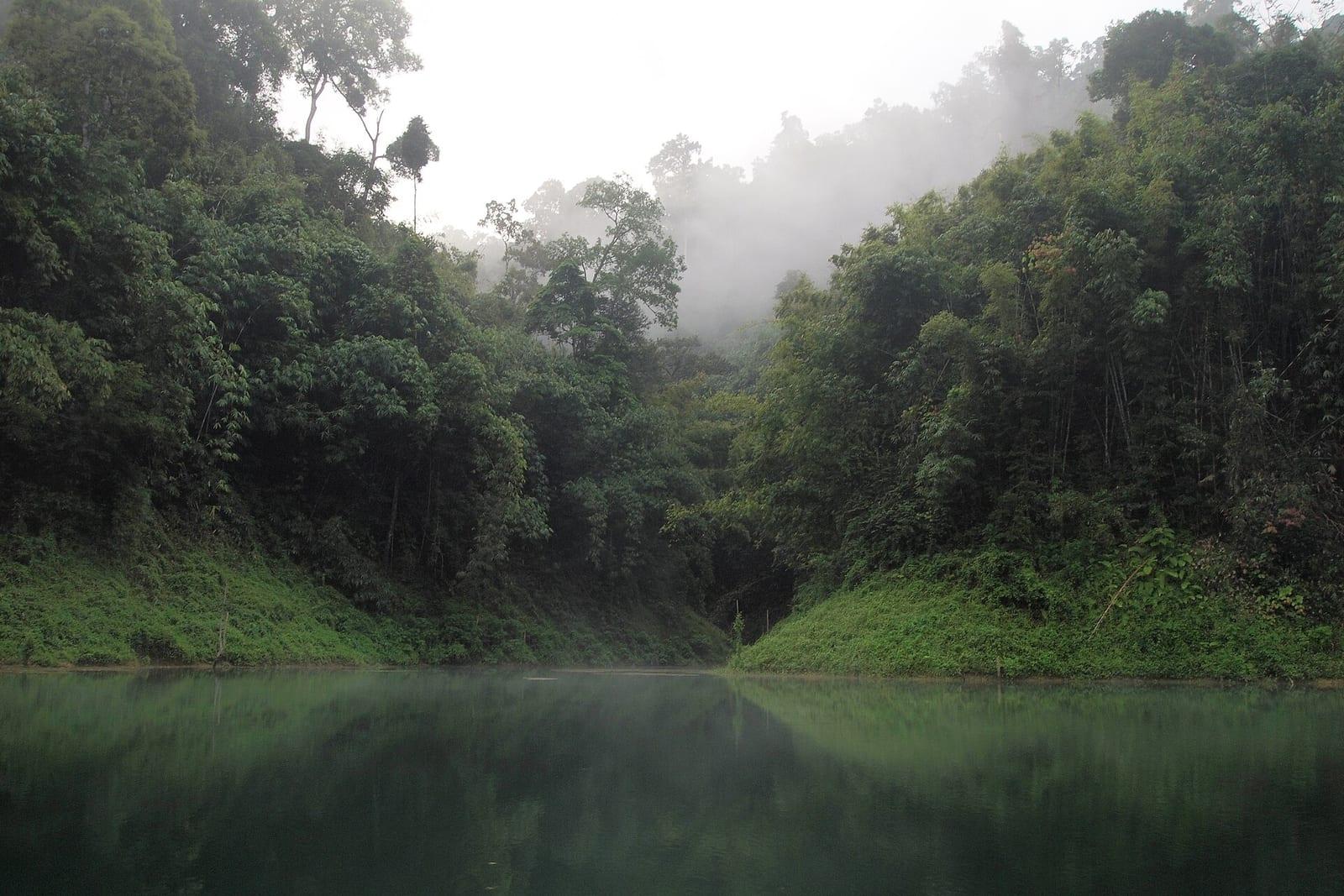
Photo: Vyacheslav Argenberg · CC BY 4.0 · via Wikimedia Commons
Choosing an Ayahuasca retreat is, above all, an exercise in judging the people who will be responsible for you. A reputable centre welcomes hard questions; a careful answer tells you as much as the answer itself. Use these twelve questions to compare retreats on the things that actually protect you. This is general education, not medical, legal, or safety advice, your own circumstances may change what matters most.
How to use this list
You do not need to interrogate anyone. You are simply gathering information, and good operators expect it. Ask by email or on a screening call, then notice not only what they say but how they say it. Vagueness, irritation at being asked, or pressure to commit are themselves answers. Reassurance is not a substitute for a clear, specific process.
A reasonable benchmark: in a 2026 study of 49 organisations advertising psychedelic retreats, all of them collected participants' medical histories, most required some form of medication washout, and most worked with a licensed healthcare professional or someone with emergency-response training. [1] Those are the kinds of practices you are checking for below.
1. What does your screening process involve, and do you ask about my medications and psychiatric history?
A good answer describes a real intake process, a written health questionnaire and usually a conversation, that asks specifically about prescription medications, heart conditions, and personal or family history of psychosis, mania, or schizophrenia. A worrying answer is "everyone is welcome" or a single tick-box. The medication question is not bureaucratic: Ayahuasca contains monoamine oxidase inhibitors, and combining these with certain antidepressants (such as SSRIs) or other serotonergic drugs can cause serotonin syndrome, which can be dangerous. [2] Never stop a prescribed medication on your own, any washout must be planned with your prescribing doctor, not improvised on a retreat's say-so.
2. Who is the lead facilitator, and what is their training and lineage?
You want a name, a track record, and an honest account of where their training comes from, a specific indigenous lineage or tradition, a teacher, years of practice. Ayahuasca traditions are distinct, not interchangeable, and a credible facilitator can speak precisely about their own. A worrying answer is a facilitator who appeared recently with a vague "shamanic" backstory, who cannot say who trained them, or who claims to heal anything and everything.
3. What medical support is on site, and what is the emergency plan?
Ask who is present trained in first aid or emergency response, what equipment exists, how far the nearest hospital is, and how someone would be evacuated. Most reputable operators work with a licensed health professional or someone with emergency training. [1] A confident, concrete plan is a good sign. "Nothing has ever gone wrong" is not a plan. Reported serious harms, while uncommon, are most often linked to cardiac events, severe dehydration from vomiting, or dangerous drug interactions, all of which a prepared site can mitigate. [3]
4. How large are the groups, and what is the facilitator-to-participant ratio?
Smaller groups and more facilitators mean more attention if you struggle. Ask how many people sit per ceremony and how many trained staff are in the room. A good answer gives you real numbers and a sense that no one will be left alone in distress. A worrying answer is a large ceremony with one or two facilitators, or evasiveness about size.
5. What is in the brew, and do you add other plants or substances?
The honest answer is usually that the brew is made from the Ayahuasca vine and a DMT-containing companion plant, prepared by named people. Be cautious of centres that add other psychoactive plants, tobacco preparations, brugmansia/toé, or others, without clear explanation and consent, as some additives carry their own serious risks. You are asking for transparency, not a recipe. A reputable operator will tell you what tradition the brew comes from and who prepares it.
6. How do you handle informed consent and physical contact?
You should be told, in advance and in writing, what the experience may involve, including difficult psychological and physical effects, and you should be asked for explicit consent. Ask directly about the centre's physical-contact policy: whether, when, and how facilitators touch participants, and how you can decline. A good centre has a clear, conservative policy and invites you to set your own boundaries. Any ambiguity here, or any hint that contact is at the facilitator's discretion, is a serious red flag.
7. What integration support do you offer afterward?
Integration, making sense of the experience and carrying it into daily life, is where much of the value and much of the risk lives. In the 2026 retreat study, all the organisations surveyed offered some form of integration support. [1] Ask what theirs looks like: group sessions on site, follow-up calls, referrals to therapists trained in this area. This matters because difficult after-effects are not rare. In the Global Ayahuasca Survey, around 55% of respondents reported some mental-health-related adverse effect in the days, weeks, or months afterward; most were short-lived, but about 12% sought professional support. [4] A centre that goes silent the moment you leave is only doing half the job.
The question is not only "will the ceremony be safe?" but "who is responsible for me the week after I get home?"
8. What are your pricing, cancellation, and refund terms?
Prices should be clear and complete, with no surprise add-ons. Ask what happens if you need to cancel, if you fail screening, or if a medical issue arises before you travel. Reasonable, written terms signal a professional operation. High-pressure sales tactics, non-refundable deposits taken before any screening, or reluctance to put terms in writing are warning signs.
9. What happens if I have a crisis during a ceremony?
Ask the centre to walk you through a concrete scenario: someone becomes overwhelmed, panicked, or physically unwell mid-ceremony, what do staff actually do? A good answer describes calm, trained, one-to-one support and a clear threshold for seeking medical help. Acute effects such as intense fear, agitation, confusion, raised heart rate, and disorientation are common rather than exotic, so this should be familiar territory for them. [3] Bravado, or framing all distress as something you simply must "surrender" to, is not a safety plan.
10. Can you connect me with past participants for references?
A centre with a good reputation can usually point you to people willing to speak about their experience, or to independent, verified reviews. Be wary of testimonials that exist only on the centre's own marketing, or a refusal to provide any reference at all. Cross-check names and stories where you can.
11. What is the legal status of Ayahuasca where the retreat operates?
Legality varies sharply by country: Ayahuasca is specifically permitted in some places (for example, Peru), unregulated in others, and prohibited in many. [5] A trustworthy operator is straightforward about the legal context in their jurisdiction. Know the law where you live, too, in the United States, DMT is a Schedule I controlled substance, [6] and in the United Kingdom it is a Class A drug under the Misuse of Drugs Act 1971, with serious penalties for possession or supply. [7] A centre that dismisses the legal question, or encourages you to break the law on your way home (for instance by carrying the brew across borders), is not one to trust.
12. Who can I contact if something goes wrong, during or after?
Finally, ask for a named point of contact and a clear channel, during your stay and after you leave, for problems, complaints, or safeguarding concerns. A professional operator has an answer. Silence here suggests no one is truly accountable.
A final word
No retreat can promise you a safe or transformative experience, and you should be suspicious of any that does. What a good centre can do is screen carefully, staff competently, obtain real consent, plan for emergencies, and support you afterward. These twelve questions are a way to find the operators who take that seriously, and to give yourself permission to walk away from the ones who do not. If any answer leaves you uneasy, that unease is information. Take your time, and where your health is concerned, talk it through with a qualified clinician before you decide.
Sources
- [1]Aday JS et al. Reported Safety Practices of Publicly Advertised Psychedelic Retreat Organizations. JAMA Network Open, 2026, Structured interviews with 49 organisations advertising psychedelic retreats; found all collected medical histories, most required medication washout, most worked with a licensed health professional or someone with emergency training, and all offered integration support. DOI: 10.1001/jamanetworkopen.2025.52505 ↩
- [2]Neurobiological research on N,N-dimethyltryptamine (DMT) and its potentiation by monoamine oxidase (MAO) inhibition. PMC, Background on Ayahuasca's MAO-inhibiting pharmacology and the basis for serotonergic drug-interaction concerns (e.g. serotonin syndrome risk). ↩
- [3]Adverse effects of Ayahuasca: Results from the Global Ayahuasca Survey. PLOS Global Public Health (also at PMC10021266), Large international survey reporting acute physical and mental-health adverse effects, common acute effects (hallucinations, agitation, tachycardia, confusion), and that serious harms are uncommon and often linked to cardiac events, dehydration, or drug interactions. ↩
- [4]Adverse effects of Ayahuasca: Results from the Global Ayahuasca Survey (NCBI PMC mirror), ~69.9% reported acute physical adverse effects (mostly vomiting/nausea); ~55.4% reported a mental-health adverse effect afterward, most short-lived; ~11.9% sought professional mental-health support. ↩
- [5]Legal status of Ayahuasca by country. Wikipedia, Overview showing legality varies by country, specifically permitted in some (e.g. Peru), unregulated in others, prohibited in many. ↩
- [6]DMT Drug Fact Sheet. US Drug Enforcement Administration, Diversion Control Division, Confirms DMT is a Schedule I controlled substance under the US Controlled Substances Act. ↩
- [7]Misuse of Drugs Act 1971. legislation.gov.uk, UK statute classifying DMT as a Class A drug; possession and supply carry serious penalties. See also GOV.UK controlled drugs list. ↩
What to read next
Choosing a retreat
Ayahuasca Aftercare: The First Days and Weeks Home
Ayahuasca aftercare for the first days and weeks home: rest, gentle diet, sleep, emotional volatility, postponing big decisions, and when to see a clinician.
· 8 min read

Choosing a retreat
Where Is Ayahuasca Legal? A Country-by-Country Overview
Is Ayahuasca legal? A clear, well-sourced country-by-country overview of DMT laws, the UN treaty, religious exemptions and grey zones. Not legal advice.
· 7 min read
Choosing a retreat
Ayahuasca Integration: How to Make the Insights Last
Ayahuasca integration turns ceremony insight into lasting change. Practices, circles, coaches, red flags, and when to see a licensed therapist, honestly.
· 8 min read