Ayahuasca Retreats in Peru: What to Know Before You Go
Peru is the world's biggest ayahuasca destination, but its retreat centres are largely unregulated. A clear-eyed guide to the legal and cultural context, the real medical and travel risks, how to vet
·
7 min read
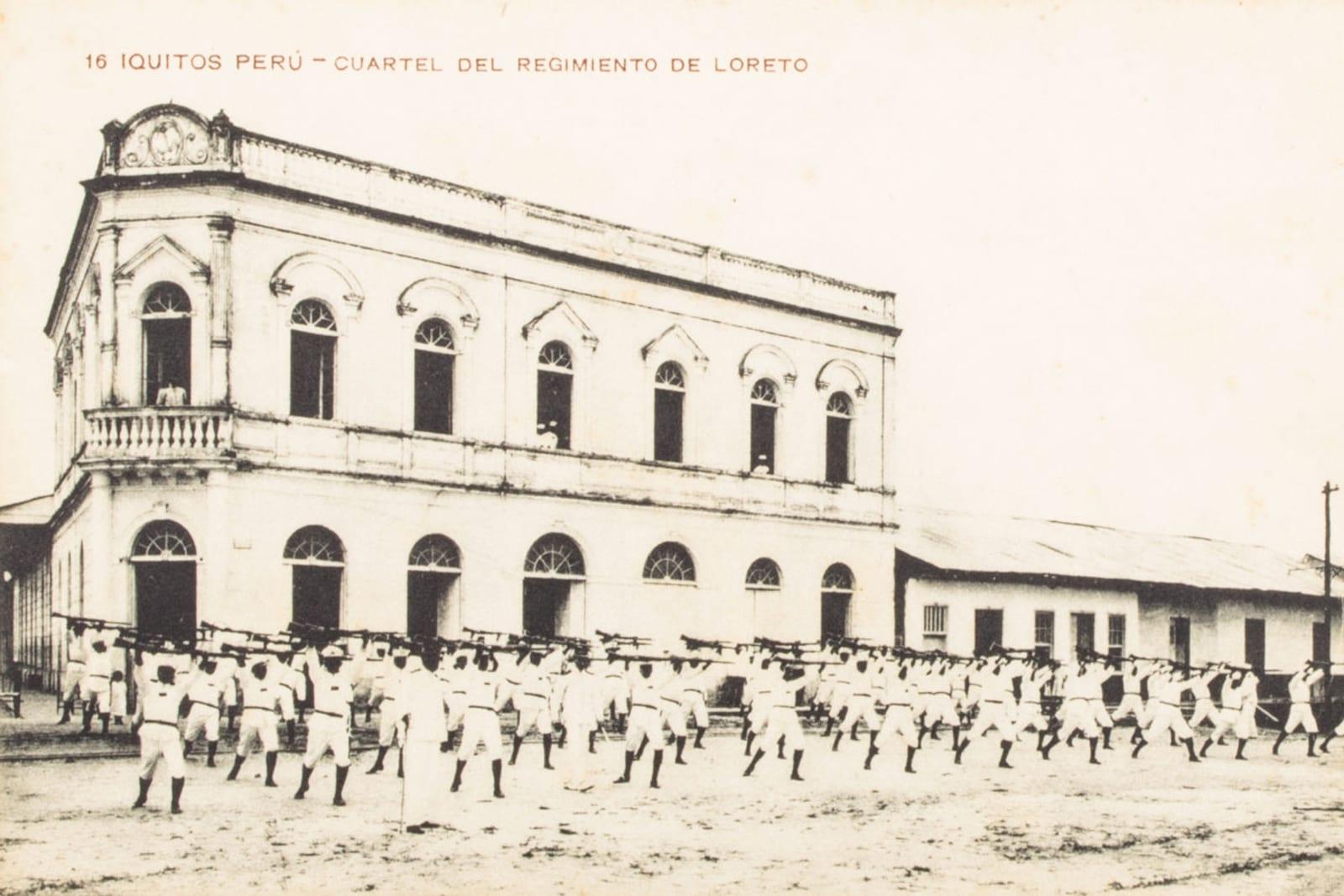
Photo: Lira y Gil collection. · CC BY-SA 4.0 · via Wikimedia Commons
Peru is the world's best-known destination for ayahuasca, where the brew's traditional use is recognised as national cultural heritage and ceremonies range from indigenous-led healing to slick commercial retreats. That openness is real, but so are the risks: the centres are largely unregulated, and choosing well matters more here than almost anywhere. This guide covers why Peru became the hub, the legal and cultural context, how to vet a centre, and what travellers should weigh before booking.
Why is Peru the centre of ayahuasca tourism?
Ayahuasca is a plant brew with deep roots across the western Amazon, and Peru sits at the heart of that geography. The Upper Amazon around Iquitos and Pucallpa is home to communities, including the Shipibo-Conibo, for whom the brew has been part of healing and ceremonial life for generations. Combine living traditions with relatively easy air access and a permissive legal climate, and Peru became the single most popular country for ayahuasca tourism in the world.[1]
That popularity has produced a spectrum. At one end are indigenous-led ceremonies and small lineage-based centres; at the other, large commercial retreats marketing weekend "spiritual cleanses" to international visitors. Quality, safety, and integrity vary enormously across that range, and price is not a reliable signal of either. If you are still deciding whether this is for you at all, our pillar on what ayahuasca is is a calmer place to start than a booking page.
Is ayahuasca legal in Peru?
Yes, with important nuance. Peru is one of the few countries where ayahuasca is not prohibited. When it joined the 1971 Convention on Psychotropic Substances, it preserved traditional Amazonian use. In 2008, Peru's national culture authority formally declared the traditional knowledge and ceremonial use of ayahuasca by indigenous communities to be Cultural Heritage of the Nation (Patrimonio Cultural de la Nación).[2]
Read the wording carefully. That declaration protects indigenous traditional and ritual knowledge, not a free market in the brew. The authorities at the time explicitly distanced traditional use from de-contextualised, commercial, consumer-oriented use.[2] In practice this means retreat centres operate in a lightly regulated space: there is no government licensing system guaranteeing a centre is safe, medically screened, or ethically run. For how the law works in your own country, and why the brew remains illegal in most of them, see where ayahuasca is legal.
What are the real safety risks?
This is where honesty matters most. Ayahuasca is physically and psychologically demanding, and most centres sit far from modern medical care.
Medical and drug-interaction risk. Ayahuasca contains DMT plus beta-carbolines that act as monoamine oxidase inhibitors (MAOIs). This makes it dangerous to combine with many serotonergic medications, including most antidepressants (SSRIs and SNRIs) and other MAOIs, with serotonin syndrome among the recognised hazards.[4] It also raises heart rate and blood pressure, which is a concern for people with cardiovascular conditions.[4] If you take prescription medication, do not stop it on your own; discuss it with your prescriber and read ayahuasca and antidepressants and ayahuasca and your heart first.
Psychological risk. For people with a personal or family history of psychosis or bipolar disorder, ayahuasca may carry serious risk; our piece on whether ayahuasca can trigger psychosis covers what is and is not known.
Travel and conduct risk. Government warnings have grown sharper. In a January 2025 health alert, the U.S. Embassy in Lima urged citizens not to use ayahuasca or kambo, citing deaths and severe illness among visitors in 2024, and reports of people being sexually assaulted, injured, or robbed while under the influence at "healing" or "retreat" centres.[3] An independent analysis of media-reported deaths from 1994 to 2022 found that two in three occurred in Amazonian countries, with Peru accounting for the largest share, and most of the Peru cases were connected to tourist retreat centres during the height of the tourism boom.[5] That same analysis stresses that no autopsy has directly attributed a death to acute intoxication from the basic brew itself, and that many of the deaths could have been avoided with proper screening and supervision.[5] These are not reasons to assume disaster, but they are reasons to take vetting seriously.
How do you vet an ayahuasca retreat in Peru?
Because the state does not do this for you, you have to. The strongest signal is a centre's seriousness about medical screening and emergency planning, not its photos or testimonials.
- Medical screening. A responsible centre asks detailed health and medication questions before taking your money and turns people away when warranted. A centre that screens nobody is a red flag.
- Emergency provision. Ask what happens in a crisis: distance to a hospital, on-site medical training, oxygen, and a plan for psychological emergencies.
- Facilitator-to-guest ratio. Smaller groups with experienced facilitators present throughout the night are safer than crowded ceremonies.
- Transparency. Reputable centres answer hard questions directly and do not pressure you to book.
Our guides on how to choose a retreat safely and the specific questions to ask a retreat go through this in detail, and what to expect at a retreat sets realistic expectations for the days themselves.
Facilities or groups offering ayahuasca are not regulated by the Peruvian government and may not follow health and safety laws or practices.
Ethics and reciprocity with local communities
Peru's openness rests on indigenous traditions, yet the economics of the boom often bypass the communities at its source. Observers note that relatively few Shipibo people make a good living from ayahuasca tourism, while many of the best-paid roles and the marketing advantage sit with foreign-run centres whose revenue largely leaves the region.[6] Where retreats are genuinely indigenous-led or co-created, the income can support healers' families, healthcare, education, and cultural continuity.[6]
You cannot fix this as one traveller, but your choice has weight. Favour centres that employ and fairly pay local healers, are transparent about where money goes, and treat reciprocity as a matter of justice rather than charity. Foregrounding the people whose knowledge this is, rather than treating it as a consumer product, is part of going responsibly.
Practical travel notes
A few concrete things first-timers often underestimate:
- Location and access. Many serious centres are deep in the jungle near Iquitos (reachable mainly by air or river) or Pucallpa. Remoteness is part of the setting, but it also means medical help is hours away.
- Time and the dieta. Worthwhile retreats are rarely a single night. Many run a week or longer and ask you to follow a preparatory diet beforehand; see the ayahuasca dieta explained.
- The experience itself. Expect intensity, including the purge (vomiting is treated as normal in this context) and unpredictable psychological terrain.
- Cost and red flags. Prices vary widely; bargain-basement weekend offers are often where corners get cut. See how much a retreat costs.
- Aftercare. The days and weeks afterward matter as much as the ceremony. Plan for integration rather than flying home the next morning.
If at any point you are in mental-health crisis, reach out to local emergency services or, in the UK, the Samaritans on 116 123. Ayahuasca is not a substitute for crisis care.
The honest bottom line
Peru offers something genuine: a place where ayahuasca's traditional use is respected in law and where deep lineage knowledge still lives. It also offers a largely unregulated marketplace where the gap between an excellent centre and a dangerous one is wide and not always visible from a website. The research on ayahuasca's potential, for example early-stage trials in treatment-resistant depression, is real but preliminary, not a guarantee of benefit.[7] If you go, go slowly, vet hard, involve a clinician, and choose a centre that takes both your safety and the source communities seriously. Our resources page lists independent organisations, including ICEERS, that can help you think it through.
Sources
- [1]ICEERS, Legal status of ayahuasca in Peru, Independent NGO summary of Peru's legal framework and the 1971 Convention reservation. ↩
- [2]Peru National Cultural Heritage declaration of traditional ayahuasca use (2008), via Wikipedia overview with primary references, Documents the 2008 Instituto Nacional de Cultura declaration and the distinction from commercial use. ↩
- [3]U.S. Embassy in Peru, Health Alert: Do Not Use Ayahuasca/Kambo (23 January 2025), Official government warning citing 2024 deaths, illness, assault and robbery, and lack of regulation. ↩
- [4]Hamill et al., 'Ayahuasca: Psychological and Physiologic Effects, Pharmacology and Potential Uses in Addiction and Mental Illness' (Current Neuropharmacology, 2019; PMC), Peer-reviewed review of pharmacology, MAOI mechanism, drug interactions (including serotonin syndrome with SSRIs) and cardiovascular effects. ↩
- [5]ICEERS, Ayahuasca, Global Consumption & Reported Deaths in the Media (Executive Summary, June 2023), Independent analysis of 58 media-reported deaths 1994-2022: two in three occurred in Amazonian countries, Peru's 17 cases tied to tourist retreat centres, and no autopsy directly attributing a death to the basic brew. ↩
- [6]ICEERS, The Impacts of Ayahuasca Tourism, Analysis of reciprocity, benefit-sharing and the economics of ayahuasca tourism for Shipibo communities. ↩
- [7]Palhano-Fontes et al., 'Rapid antidepressant effects of the psychedelic ayahuasca in treatment-resistant depression: a randomized placebo-controlled trial' (Psychological Medicine, 2019; PMC), Small early-stage RCT; example of preliminary clinical research, not proof of efficacy. ↩
Frequently asked questions
- Is it legal to do ayahuasca in Peru?
- Yes. Peru is one of the few countries where ayahuasca is not prohibited, and its traditional indigenous use was declared national cultural heritage in 2008. That protects traditional ritual knowledge, not a regulated commercial market, so retreat centres are not government-certified for safety.
- Are ayahuasca retreats in Peru safe?
- It depends entirely on the centre, and there is no official body guaranteeing safety. The U.S. Embassy in Lima warned in 2025 about deaths, illness, assault and robbery at unregulated retreats, and an independent analysis links most of Peru's media-reported deaths to tourist retreat centres. Careful vetting of medical screening and emergency planning is essential, and a clinician should review your individual health risks.
- Can I do ayahuasca in Peru if I take antidepressants?
- This is a serious concern. Ayahuasca acts as an MAOI and can interact dangerously with SSRIs, SNRIs and other medications, with serotonin syndrome among the risks. Never stop prescribed medication on your own; discuss it with your prescriber well in advance.
- How much does an ayahuasca retreat in Peru cost?
- Prices vary widely, from budget multi-day stays to expensive longer programmes. Cost is not a reliable signal of safety or quality, and unusually cheap weekend offers are often where corners get cut. See our dedicated guide on retreat costs for detail.
- Is ayahuasca tourism harmful to indigenous communities?
- It can be both harmful and helpful. Much revenue bypasses the indigenous communities whose traditions underpin the practice, while genuinely indigenous-led or fairly run centres can support healers, healthcare and cultural continuity. Choosing centres that pay and involve local healers fairly matters.
- Where in Peru do ayahuasca ceremonies take place?
- Many established centres are in the Upper Amazon around Iquitos and Pucallpa, often deep in the jungle. The remote setting is part of the tradition, but it also means modern medical help can be hours away, which is worth weighing carefully.
What to read next
Choosing a retreat
Ayahuasca Aftercare: The First Days and Weeks Home
Ayahuasca aftercare for the first days and weeks home: rest, gentle diet, sleep, emotional volatility, postponing big decisions, and when to see a clinician.
· 8 min read
Choosing a retreat
Where Is Ayahuasca Legal? A Country-by-Country Overview
Is Ayahuasca legal? A clear, well-sourced country-by-country overview of DMT laws, the UN treaty, religious exemptions and grey zones. Not legal advice.
· 7 min read
Choosing a retreat
Ayahuasca Integration: How to Make the Insights Last
Ayahuasca integration turns ceremony insight into lasting change. Practices, circles, coaches, red flags, and when to see a licensed therapist, honestly.
· 8 min read