Women and Ayahuasca: Safety, Boundaries and Choosing Well
An honest, practical guide for women on ayahuasca safety: the real risk of facilitator misconduct, boundaries to set, women-led options and red flags.
By Elena Marsh
·
8 min read
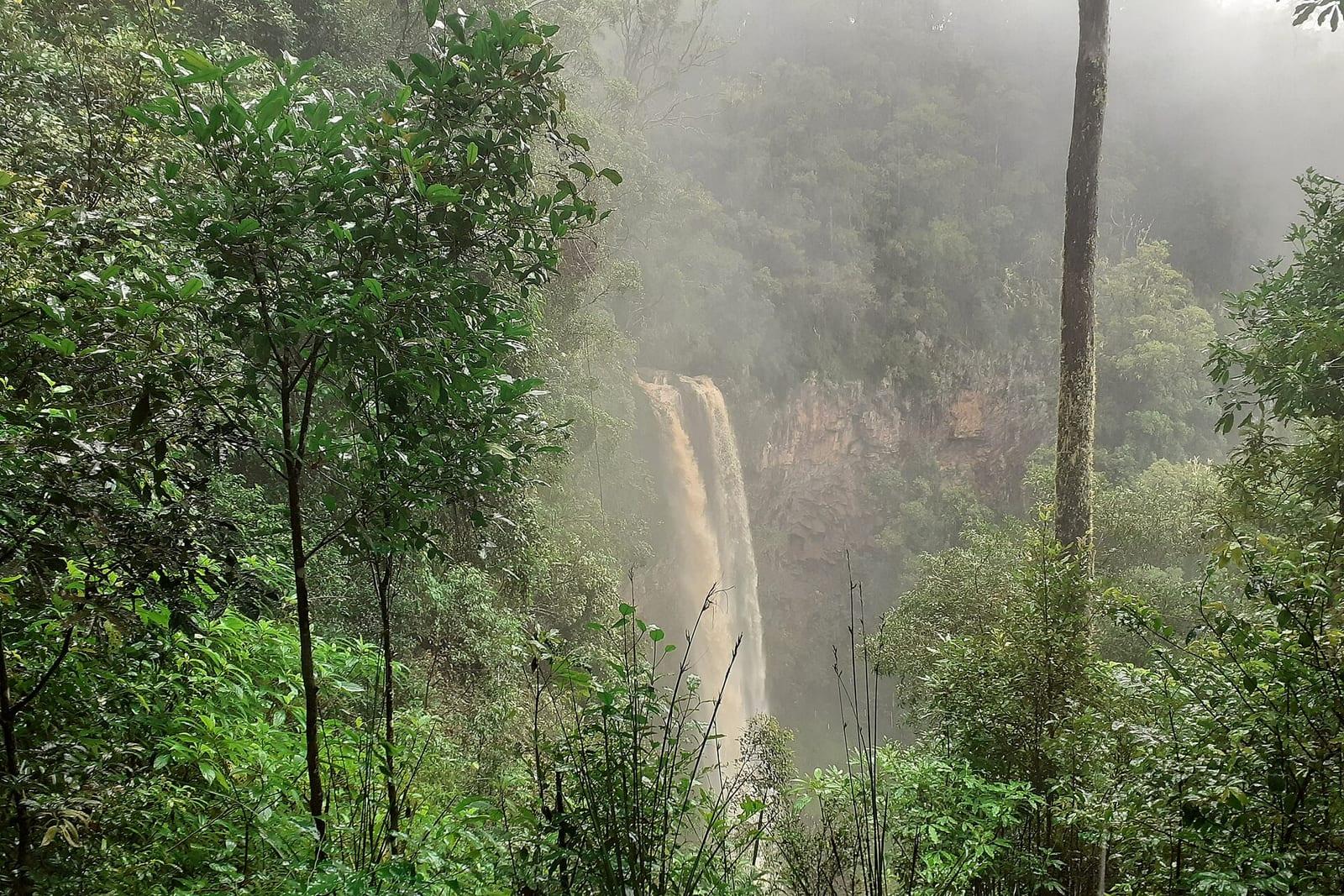
Photo: Rammy117 · CC BY-SA 4.0 · via Wikimedia Commons
If you are a woman researching ayahuasca for the first time, the most important safety conversation is rarely about the brew itself. It is about people, power, and physical boundaries in a setting where you will be vulnerable. Most participants have safe, well-held experiences, but sexual misconduct by some facilitators is a documented, under-reported risk, and it falls overwhelmingly on women. Knowing the red flags, the right questions, and your options, including women-led ceremonies, lets you choose well and protect yourself.
Is ayahuasca safe for women?
For most women, the women-specific risks of ayahuasca are not chemical so much as relational and situational. The brew affects everyone broadly the same way, and the standard medical and psychological cautions apply to all participants regardless of sex. Those general considerations, including heart, medication, and mental-health risks, are covered in our safety and contraindications pillar and in who should not take ayahuasca.
What is genuinely women-specific is the pattern of harm. In ayahuasca settings, the people most often harmed are female participants, and the harm most often comes from male healers or facilitators who exploit their position of trust.[1] This is not a reason to avoid ayahuasca. It is a reason to vet the people and the container as carefully as you would vet the substance.
The documented risk of sexual misconduct
This is the part the glossy retreat brochures skip, so we will be direct. Sexual abuse and misconduct in ayahuasca contexts is real, ranges from invasive touching to coerced "consensual" sex to rape, and is widely understood within the community to be under-reported because most cases never come to light.[1]
The scale is hard to measure precisely, but it is not negligible across psychedelic settings more broadly. In a 2024 survey of 1,221 people who used psychedelics outside clinical settings, roughly 8% reported that they or someone they knew had experienced inappropriate sexual contact by a guide, sitter, or practitioner.[3] The researchers note this was a convenience sample, so it cannot be read as a precise population rate, but it confirms the problem is not rare or imaginary.
The mechanism is always the same: an abuse of power. A facilitator holds authority, you are in an altered, suggestible, and physically vulnerable state, and that imbalance is what an abuser exploits.[1][3] Understanding this reframes everything. The question is not "is this person spiritual enough?" It is "does this person and this centre have structures that constrain their own power?"
It is not your fault if you experience abuse. Do not suffer in silence.
Red flags in a facilitator or retreat
The Chacruna Institute's community guide, developed with survivors and experienced practitioners, lists behaviours that should give you pause.[4] Treat any of these as a serious warning sign:
- Sexualising the relationship. A facilitator who comments on your looks, is excessively "touchy," or frames sexual contact as part of your healing.
- Special, private invitations. Being singled out for a "special" individual healing, a private session, or a one-on-one experience that others are not offered.
- Claims that sex has healing power. Any suggestion that sexual contact with the healer transfers energy, removes blocks, or that "ayahuasca enhances sexual activity."[4]
- Secrecy. Being told to keep something between the two of you, or that others would not understand.
- Boundary-eroding talk. Statements like "my partner does not mind," or pressure dressed up as spiritual openness.
- No women present. An all-male facilitation team with no female facilitator, helper, or chaperone in the room.
Beyond individuals, weak structures are a red flag in themselves: a centre with no written code of conduct, no clear complaints process, no medical screening, anonymous or unverifiable facilitators, or reviews you cannot trace to real past participants. Our guide to choosing a retreat safely goes deeper on vetting the organisation as a whole.
Physical contact and safeguarding policies to ask about
Some legitimate ayahuasca practices do involve touch or proximity, such as sopladas (blowing tobacco smoke) or limpiezas (cleansings). That is exactly why clarity beforehand matters. According to the Chacruna guide, nudity is not a normal requirement, and healers do not customarily ask patients to remove undergarments for healing.[4] You are entitled to keep your clothes on, to wear swimwear or undergarments for plant baths, and to refuse any touch you do not want.
Before you book, ask, and get answers in writing where you can:
- Is there a written code of conduct or ethics policy, and may I read it?
- What is your policy on physical contact during ceremony, and how is consent handled in an altered state?
- Are female facilitators or helpers present throughout every ceremony, including overnight?
- Who can I go to during the night if I feel unsafe, and how do I signal that?
- What is your complaints and safeguarding process, and have you ever acted on a report?
- Can I speak to past female participants?
If a centre is evasive, defensive, or treats these as a lack of trust, that is your answer. A genuinely safe operation expects these questions and welcomes them. Our list of questions to ask a retreat covers the broader vetting checklist.
Women-led and women-only options
A growing number of centres offer women-only retreats or ceremonies led by female facilitators and curanderas. The Chacruna guide explicitly suggests that drinking alongside trusted friends or experienced women is one protective strategy.[4] Women-led containers are not automatically safe, and a female facilitator can also cause harm, so apply the same vetting. But for many first-timers, a well-run women-only space removes a layer of risk and can feel meaningfully easier to relax into.
Whatever you choose, two simple measures help: bring or arrange a trusted companion where possible, and tell someone at home your itinerary, the centre's name, and when to expect contact.
Vulnerability during ceremony, and how to plan for it
Ayahuasca can leave you physically unsteady, emotionally wide open, and deep in your own inner experience for hours. That state is part of the point, and it is also precisely when you are least able to advocate for yourself. You can read more about the felt experience in what an ayahuasca ceremony feels like and the common worry about losing control.
Because of that vulnerability, decide your boundaries while sober and clear-headed, not in the moment. Know where the bathroom is, who the female helpers are, and how to call for help. Trust your instinct: if something feels wrong, it is allowed to be wrong, and you do not owe anyone politeness over your safety. A good centre builds the container so that you never have to police it yourself, but knowing your own plan is empowering rather than fearful.
If something happens: support and reporting
If you experience or witness misconduct, the responsibility lies entirely with the person who crossed the line, never with you.[4] You have options, and you can use them on your own timeline:
- Get to safety first and reach a trusted person, whether a companion, a female facilitator you trust, or someone at home.
- Document what you can while it is fresh, including dates, names, and what happened.
- Report it to the centre's complaints process, to other participants, and, depending on the country, to local authorities. Reviews and warnings can protect the next woman.
- Seek support from a sexual-assault service or counsellor. You do not have to have "proof" to deserve help.
Choosing well, without fear
None of this means ayahuasca is inherently dangerous for women, and it is not a reason to talk yourself out of an experience you have considered carefully. It means the same thing the rest of this site keeps coming back to: the container matters as much as the medicine. Choose a transparent, accountable centre, ask the uncomfortable questions, hold your boundaries, and consider women-led options. Then you can turn your attention to the parts that actually matter to you, like how to prepare and integration afterwards. For crisis lines and further support organisations, see our resources page.
Sources
- [1]Chacruna Institute, Ayahuasca Community Guide for the Awareness of Sexual Abuse, Community guidelines developed with survivors and practitioners; red flags, contact/consent guidance, and the finding that female participants are most often harmed. ↩
- [2]Peluso, Sinclair, Labate & Cavnar (2020), Reflections on crafting an ayahuasca community guide for the awareness of sexual abuse, Journal of Psychedelic Studies 4(1), Peer-reviewed account of how and why the Chacruna guide was created; abuse as an under-reported abuse of power. ↩
- [3]Kruger et al. (2024), Psychedelic Therapist Sexual Misconduct and Other Adverse Experiences Among a Sample of Naturalistic Psychedelic Users, Psychedelic Medicine, Survey of 1,221 naturalistic psychedelic users; ~8% reported inappropriate sexual contact by a guide/sitter/practitioner (convenience sample). ↩
- [4]Shoar, Bazinet & Jairaj (2025), Exploring Psychedelics for Unmet Needs in Women's Reproductive Health, Psychedelic Medicine, Reviews the substantial gaps in evidence on psychedelic safety across menstruation, pregnancy, postpartum, breastfeeding and menopause. ↩
- [5]MAPS, Ayahuasca Community Guide for the Awareness of Sexual Abuse, MAPS bulletin reproducing the Chacruna guidance, including the point that nudity is not a normal requirement of healing practices. ↩
Frequently asked questions
- Is ayahuasca more dangerous for women than men?
- The brew affects everyone broadly the same way, and the general medical cautions apply to all participants. What is women-specific is the documented pattern of sexual misconduct: female participants are most often harmed, usually by male facilitators who exploit a power imbalance. Careful vetting of the centre and facilitators is the main protective step.
- How common is sexual abuse at ayahuasca retreats?
- It is hard to measure precisely because most cases go unreported, but it is not rare. In a 2024 survey of 1,221 naturalistic psychedelic users, about 8% said they or someone they knew had experienced inappropriate sexual contact from a guide or practitioner. That was a convenience sample, so treat it as evidence the problem is real rather than a precise rate.
- What questions should a woman ask a retreat about safety?
- Ask whether there is a written code of conduct you can read, what the policy is on physical contact and consent during ceremony, whether female facilitators are present throughout, who you can turn to at night, and how complaints are handled. A trustworthy centre welcomes these questions; evasiveness is itself a red flag.
- Are women-only or women-led ayahuasca ceremonies safer?
- A well-run women-only or women-led space can remove a layer of risk and feel easier to relax into, and the Chacruna guide suggests sitting with trusted women as one protective strategy. But they are not automatically safe; apply the same vetting, since a female facilitator can also cause harm.
- Do ayahuasca ceremonies require nudity or touching?
- No. According to the Chacruna community guide, nudity is not a normal requirement and healers do not customarily ask patients to remove undergarments. Some practices involve some touch or proximity, so clarify the consent policy beforehand, and know you can keep your clothes on and refuse any contact you do not want.
- Can I take ayahuasca while pregnant, breastfeeding, or on hormonal contraception?
- Ayahuasca is generally considered unsafe in pregnancy and breastfeeding, and the evidence on psychedelics across the reproductive cycle is sparse. This article is educational, not medical advice; discuss pregnancy, breastfeeding, contraception, and any medication with a qualified clinician before considering a ceremony.
What to read next
Choosing a retreat
Ayahuasca Aftercare: The First Days and Weeks Home
Ayahuasca aftercare for the first days and weeks home: rest, gentle diet, sleep, emotional volatility, postponing big decisions, and when to see a clinician.
· 8 min read

Choosing a retreat
Where Is Ayahuasca Legal? A Country-by-Country Overview
Is Ayahuasca legal? A clear, well-sourced country-by-country overview of DMT laws, the UN treaty, religious exemptions and grey zones. Not legal advice.
· 7 min read
Choosing a retreat
Ayahuasca Integration: How to Make the Insights Last
Ayahuasca integration turns ceremony insight into lasting change. Practices, circles, coaches, red flags, and when to see a licensed therapist, honestly.
· 8 min read