Is Ayahuasca Legal in the United States?
For almost everyone in the US, ayahuasca is illegal because it contains DMT, a Schedule I controlled substance. A plain-English guide to the narrow religious exemptions, what city decriminalisation re
By Elena Marsh
·
8 min read
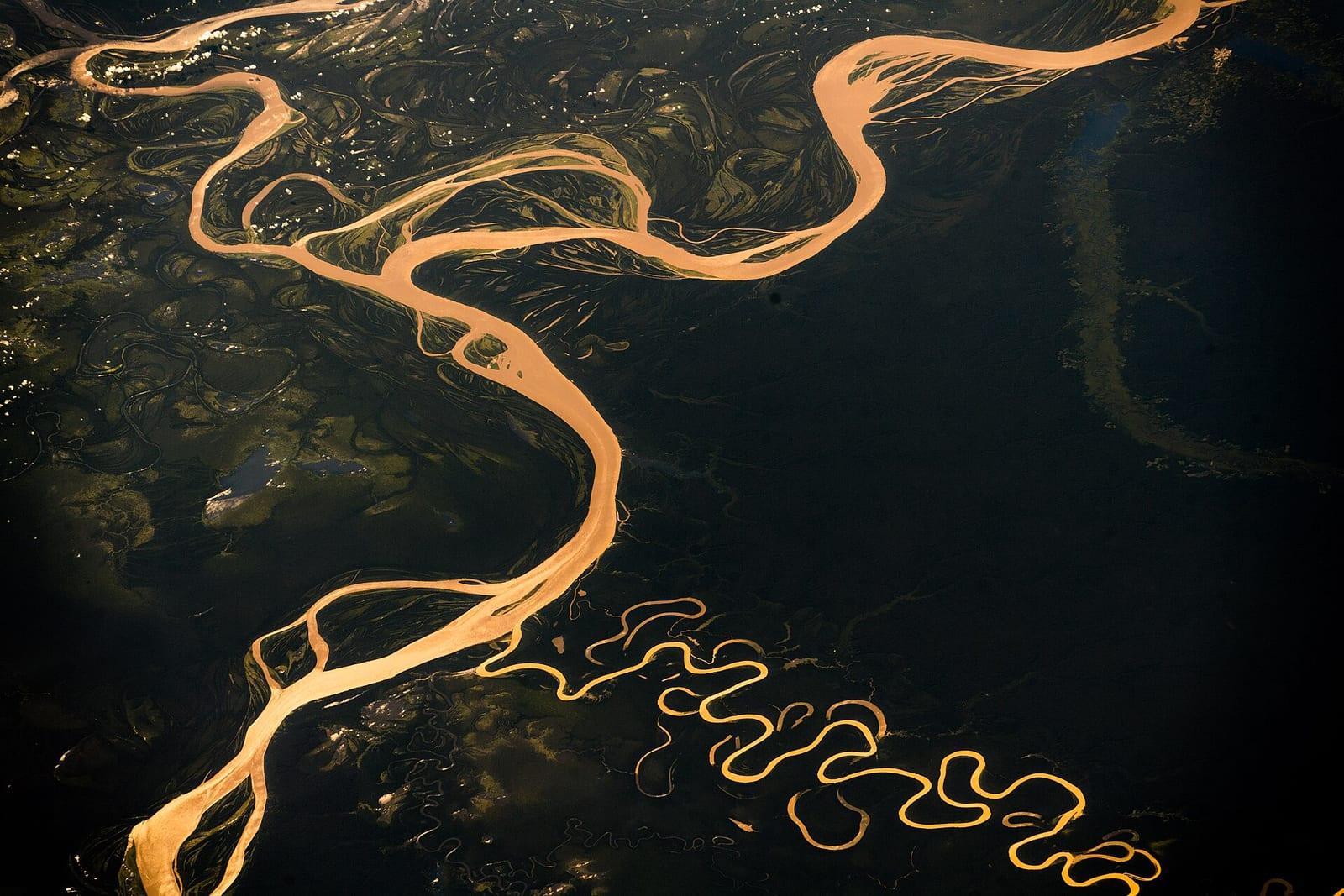
Photo: Alexander Gerst · CC BY-SA 2.0 · via Wikimedia Commons
For almost everyone in the United States, ayahuasca is not legal. The brew contains DMT, which federal law treats as one of the most tightly controlled substances there is. There are real exceptions, but they are narrow: a handful of recognised religious organisations have won the right to use ayahuasca as a sacrament, and a few cities have made personal possession a low police priority. This is general information, not legal advice, and the law in this area keeps changing.
Is ayahuasca legal in the US? The short answer
No, not for general or recreational use. Ayahuasca's psychoactive effects come mainly from DMT (dimethyltryptamine), which is listed by name as a Schedule I controlled substance under the federal Controlled Substances Act.[1] Schedule I is the strictest category, reserved for substances the government classifies as having a high potential for abuse and no currently accepted medical use in the United States. Manufacturing, distributing, and possessing DMT are broadly prohibited unless a narrow exemption applies.[1]
Because ayahuasca contains DMT, it falls under that same federal prohibition. There is no licence an ordinary member of the public can apply for to drink it legally. The exceptions that exist are specific, hard-won, and limited to particular religious groups or research settings.
If you want the bigger picture beyond the US, see our country-by-country overview of where ayahuasca is legal. For what the brew actually is, start with what is ayahuasca.
Why DMT's Schedule I status matters
DMT was placed under federal control in the early 1970s, when the Controlled Substances Act took effect.[2] The "Schedule I" label is the heart of why ayahuasca is treated as illegal: it means federal law currently recognises no approved medical use, so there is no prescription pathway and no general legal route to possess it.[1]
A common point of confusion is that the plants used to brew ayahuasca are not, by themselves, separately scheduled. What is controlled is the DMT they contain and the finished preparation. In practice, federal courts and the DEA have treated ayahuasca as a Schedule I substance because of its DMT content, which is exactly the issue at the centre of the major court cases below.[3]
The religious-use exemptions: UDV and Santo Daime
The most important exceptions to the US ban come from religious freedom law, specifically the Religious Freedom Restoration Act (RFRA) of 1993. RFRA says the federal government cannot substantially burden a person's sincere religious exercise unless it has a compelling interest and uses the least restrictive means of doing so.
Gonzales v. O Centro (UDV), Supreme Court, 2006
In 1999, US Customs agents seized a shipment of ayahuasca tea bound for the New Mexico branch of O Centro Espírita Beneficente União do Vegetal (the UDV), a Brazil-based church.[3] The church sued, arguing the seizure violated its members' rights under RFRA.
In Gonzales v. O Centro Espírita Beneficente União do Vegetal (2006), the Supreme Court ruled unanimously in the church's favour.[4] Chief Justice Roberts, writing for the Court, found the government had failed to show a compelling interest in barring the UDV's sacramental use of the tea under RFRA's strict-scrutiny test.[4] The decision allowed registered UDV members to use ayahuasca in bona fide religious ceremonies.
The government failed to demonstrate a compelling interest in barring the church's sacramental use of ayahuasca under the strict scrutiny required by RFRA.
Santo Daime in Oregon, 2009
A few years later, branches of another Brazilian ayahuasca religion, Santo Daime, won similar protection. In Church of the Holy Light of the Queen v. Mukasey (2009), a federal district court in Oregon held that RFRA protected several Santo Daime congregations' sacramental use of the tea, guided directly by the Supreme Court's UDV ruling.[5] That protection is tied to specific congregations and comes with conditions, including DEA recordkeeping and handling requirements.[5]
What these exemptions do and do not mean
It is easy to misread these wins. They are group-specific carve-outs, not general legalisation. They do not make ayahuasca legal for the public, for newcomers, or for retreats offering ceremonies to anyone who books. They apply to recognised members of specific churches, often with geographic and regulatory limits, and they were granted because those organisations could demonstrate a long-standing, sincere religious practice.
State and local decriminalisation: what it changes
You may have read that cities like Oakland (2019) and Santa Cruz (2020) "decriminalised" ayahuasca and other plant-derived psychedelics.[7] That is broadly accurate, but it is important to understand what these measures actually do.
Decriminalisation here means a city council instructed local police to make personal use and possession of certain entheogenic plants and fungi their lowest law-enforcement priority, and barred the city from spending resources to pursue such cases.[7] It does not:
- Legalise ayahuasca. Possession can still be unlawful; police are simply directed not to prioritise it.
- Permit sale, manufacture, or commercial ceremonies.
- Override federal law. DMT remains Schedule I nationwide, and decriminalisation at the city level does nothing to change federal authority.[1]
So decriminalisation reduces local enforcement risk in a few specific places, but it does not create a legal right to drink ayahuasca, and it does not protect you from federal prosecution. Treat "decriminalised" and "legal" as very different words.
Decriminalisation is not legalisation. A city deprioritising arrests is not the same as a substance being lawful to possess, sell, or serve.
So what is actually legal, and what is not?
Pulling the threads together:
- Legal: Sacramental use by recognised members of specific religious organisations that hold a court-recognised or DEA-granted RFRA exemption, within the conditions set for them. Approved scientific research conducted under federal authorisation.[4][5]
- Not legal under federal law: General, recreational, or "wellness" use; buying, importing, selling, or serving ayahuasca; running open ceremonies for the public. DMT remains Schedule I, with serious potential penalties.[1][3]
- A grey, deprioritised zone: Personal possession in a small number of cities that have passed decriminalisation resolutions, which lowers local enforcement risk but does not legalise anything or affect federal law.[7]
This is why many people from the US who want a legal experience travel to countries where ceremonial ayahuasca is permitted. Even then, legality is not portable: drinking ayahuasca lawfully abroad does not make it legal to bring any home, and importing it can carry severe consequences. If you are weighing a trip, our guide on how to choose a retreat safely and the questions to ask an ayahuasca retreat are good next reads.
Legal risk is only one part of the picture
Whatever the legal position where you are, ayahuasca is not risk-free, and the law is not the only thing to weigh. It can interact dangerously with common medications, including some antidepressants, and it carries real cardiovascular and psychological considerations.
If you are researching, please read about ayahuasca and antidepressants, who should not take ayahuasca, and the broader safety and contraindications guide. Decisions about your health belong with a qualified clinician who knows your history.
The law here is unsettled and changing
Psychedelic law in the US is moving quickly. New court cases, state ballot measures, city resolutions, and federal research developments appear regularly, and outcomes can cut in either direction. A protection that exists today may be narrowed tomorrow, and a deprioritisation measure can be amended, as Santa Cruz did in September 2021 when it removed peyote and other mescaline-containing cacti from its resolution in response to concerns from Indigenous communities.[8]
The honest summary: for the general public, ayahuasca remains illegal under US federal law, with narrow religious and research exceptions. If your situation depends on the specifics, speak to a qualified attorney, and check current sources rather than relying on any single article, including this one. You can find vetted organisations and references on our resources page.
Sources
- [1]21 U.S.C. 812, Schedules of controlled substances (DMT listed by name in Schedule I), Legal Information Institute, Cornell Law School, Official US Code text listing dimethyltryptamine among Schedule I controlled substances and setting out the Schedule I criteria (high potential for abuse, no currently accepted medical use). ↩
- [2]Controlled Substances Act overview, Wikipedia, Background on the CSA, Schedule I criteria, and DMT's control since the early 1970s. ↩
- [3]ICEERS, Legal Status of Ayahuasca in the United States, Specialist legal overview of DMT scheduling, RFRA exemptions, and limits on non-religious use. ↩
- [4]Gonzales v. O Centro Espírita Beneficente União do Vegetal, 546 U.S. 418 (2006), Unanimous Supreme Court decision protecting the UDV's sacramental ayahuasca use under RFRA. ↩
- [5]Church of the Holy Light of the Queen v. Mukasey (D. Or. 2009), Federal court ruling extending RFRA protection to Santo Daime congregations in Oregon, with associated DEA recordkeeping and handling conditions. ↩
- [6]U.S. Government Accountability Office, Drug Control: DEA Should Improve Its Religious Exemptions Petition Process for Psilocybin and Other Controlled Substances (GAO-24-106630, 2024), Found that 24 petitioners requested religious exemptions from FY2016 through January 2024 and that, as of January 2024, the DEA reported none had been granted. ↩
- [7]Marijuana Moment, Santa Cruz approves psychedelics decriminalisation, Reporting on Oakland (2019) and Santa Cruz (2020) decriminalisation and its limited, local scope. ↩
- [8]Marijuana Moment, Santa Cruz removes peyote and other mescaline-containing cacti from psychedelics decriminalisation law (October 2021), Reports the September 2021 city-council vote removing peyote and other mescaline-containing cacti from the Santa Cruz resolution after concerns from Indigenous communities. ↩
Frequently asked questions
- Is ayahuasca legal in the United States?
- For the general public, no. Ayahuasca contains DMT, which is listed by name as a Schedule I controlled substance under federal law, so possessing, importing, selling, or serving it is broadly illegal. The main exceptions are recognised religious organisations with court-recognised or DEA-granted exemptions, and authorised scientific research.
- How did the UDV and Santo Daime become legal exceptions?
- They won protection under the Religious Freedom Restoration Act. The Supreme Court ruled unanimously for the UDV in 2006, and a federal court extended similar protection to Santo Daime congregations in Oregon in 2009. Both rulings cover sincere sacramental use, not the general public.
- If my city decriminalised psychedelics, can I legally drink ayahuasca?
- Not exactly. Decriminalisation in cities like Oakland and Santa Cruz means local police treat personal possession as their lowest priority; it does not legalise the substance, permit sale or ceremonies, or override federal law. DMT remains Schedule I nationwide.
- Can I start a church to use ayahuasca legally?
- This is not a reliable or lawful shortcut. The DEA petition process under RFRA is slow and rarely successful; a 2024 Government Accountability Office review found that of 24 petitions filed from fiscal year 2016 through January 2024, the DEA reported none had been granted. People have faced legal jeopardy attempting it, and genuine exemptions require a demonstrably sincere, established religious practice.
- Is it legal to bring ayahuasca back from a country where I drank it?
- No. Drinking ayahuasca lawfully abroad does not make it legal to import into the US, and bringing it across the border can carry severe penalties under federal law. Legality is not portable.
- What are the penalties for ayahuasca in the US?
- Because it is treated as a Schedule I substance, offences involving DMT can carry serious federal penalties, including the possibility of imprisonment. This article is general information, not legal advice; consult a qualified attorney about any specific situation.
What to read next
Choosing a retreat
Ayahuasca Aftercare: The First Days and Weeks Home
Ayahuasca aftercare for the first days and weeks home: rest, gentle diet, sleep, emotional volatility, postponing big decisions, and when to see a clinician.
· 8 min read
Choosing a retreat
Where Is Ayahuasca Legal? A Country-by-Country Overview
Is Ayahuasca legal? A clear, well-sourced country-by-country overview of DMT laws, the UN treaty, religious exemptions and grey zones. Not legal advice.
· 7 min read
Choosing a retreat
Ayahuasca Integration: How to Make the Insights Last
Ayahuasca integration turns ceremony insight into lasting change. Practices, circles, coaches, red flags, and when to see a licensed therapist, honestly.
· 8 min read